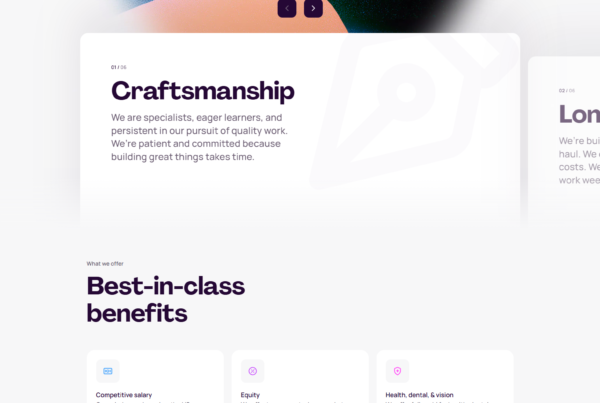
Social proof in SaaS design refers to the design patterns used to demonstrate that other people — especially people like the prospect — already trust and use the product. It includes customer testimonials, case study quotes, user counts, company logo grids, review ratings (G2, Capterra, Product Hunt), award badges, and press mentions. Social proof works by reducing the perceived risk of a decision: if companies like yours already use this, you’re less likely to be the person who made the wrong call.
SaaS Boat has 294 testimonial and social proof screenshots — the single largest page-type category in our library. Here’s what the best designs do.
 Stripe
 Intercom
 Zapier
 Retool
 Datadog
 GitLab
 Asana
Asana Figma
Figma Notion
 Loom
Loom Hotjar
 FullStory
 Amplitude
 Gong
Gong Close
Close Calendly
 Chargebee
 Dashlane
 BrowserStack
 Whimsical
Why Social Proof Design Is a Conversion Lever
The tactical question isn’t “should we have testimonials?” — it’s “which testimonials, in what format, placed where?” A logo grid without quotes is weaker than a quote with a name and a role. A quote without a company name is weaker than one with context. A static quote is weaker than a video.
According to our analysis of 294 social proof screenshots across 258 SaaS products, 91% of products use customer logos, but only 54% include named testimonials with company attribution. The gap between logo presence and quote depth is one of the largest missed conversion opportunities in SaaS design.
50 Social Proof Examples from Real SaaS Products
Logo Grids
1. Stripe — Logo row as trust layer
Stripe places a row of recognizable company logos (Target, DoorDash, Shopify, etc.) directly below the hero. The logos are familiar enough that no caption is needed. The implicit message: if they trust Stripe for payments, so can you.
2. Intercom — Customer logos with category labels
Intercom groups its customer logos by industry: “Fintech companies,” “eCommerce brands,” “SaaS teams.” This makes the logos more relevant to each visitor — a fintech founder sees fintech logos, not a generic enterprise grid.
3. Zapier — Use-case grouped logos
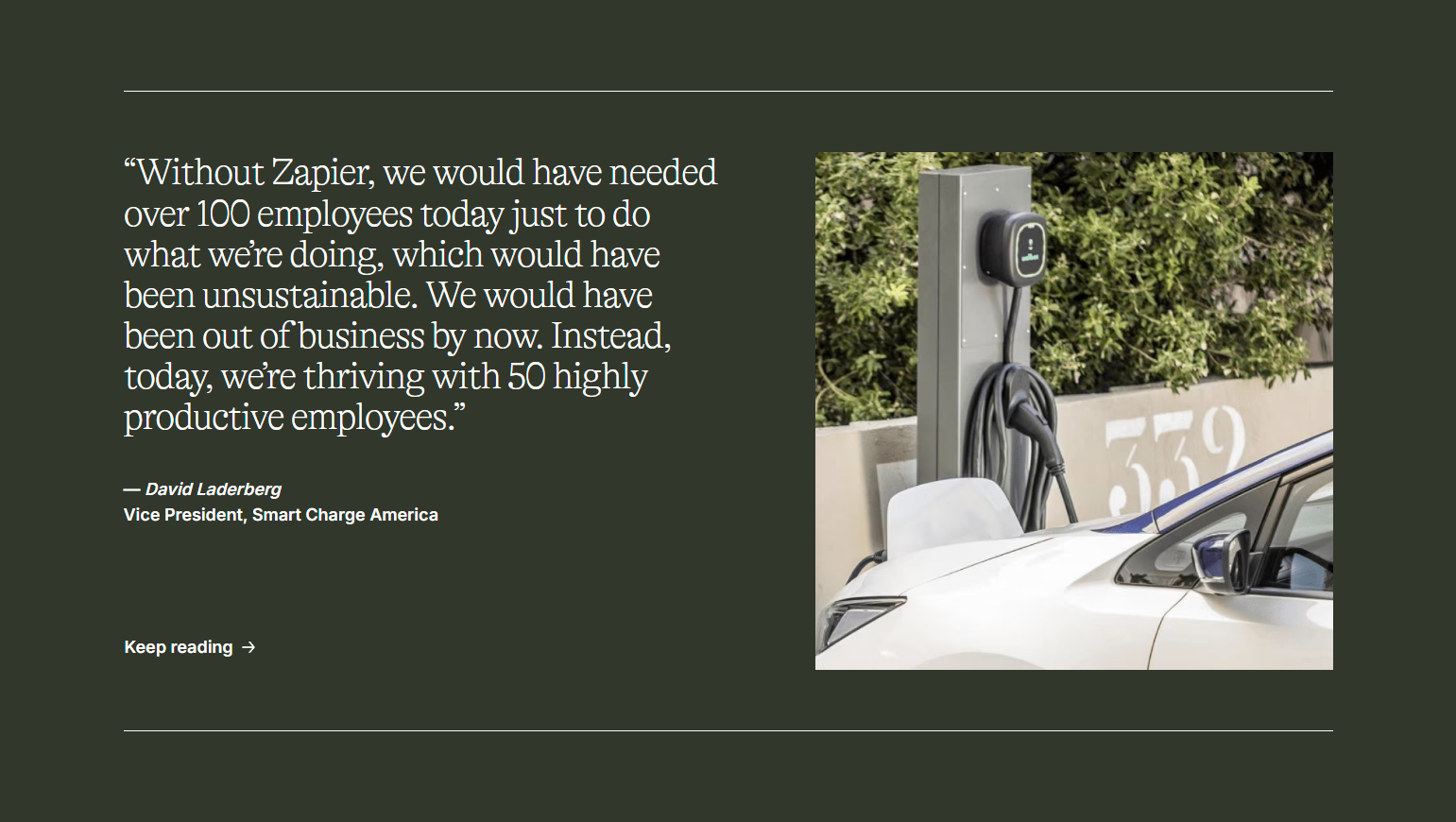
Zapier shows logos alongside the integration use case: “[Company] uses Zapier for [outcome].” The logo grid becomes a proof-of-concept gallery, not just a brand name collection.
4. Retool — “Used by teams at” framing
Retool captions their logo row: “Used by teams at [logos].” The phrase “teams at” is specific — it implies the decision-maker is a team lead or manager, not an individual. This subtle framing targets the actual buyer.
5. Datadog — Volume-first social proof
Datadog leads with numbers before logos: “25,000+ organizations, 17 billion events per day.” Numbers of this scale make logos feel like supporting evidence rather than the main claim.
6. GitLab — Open source community as proof
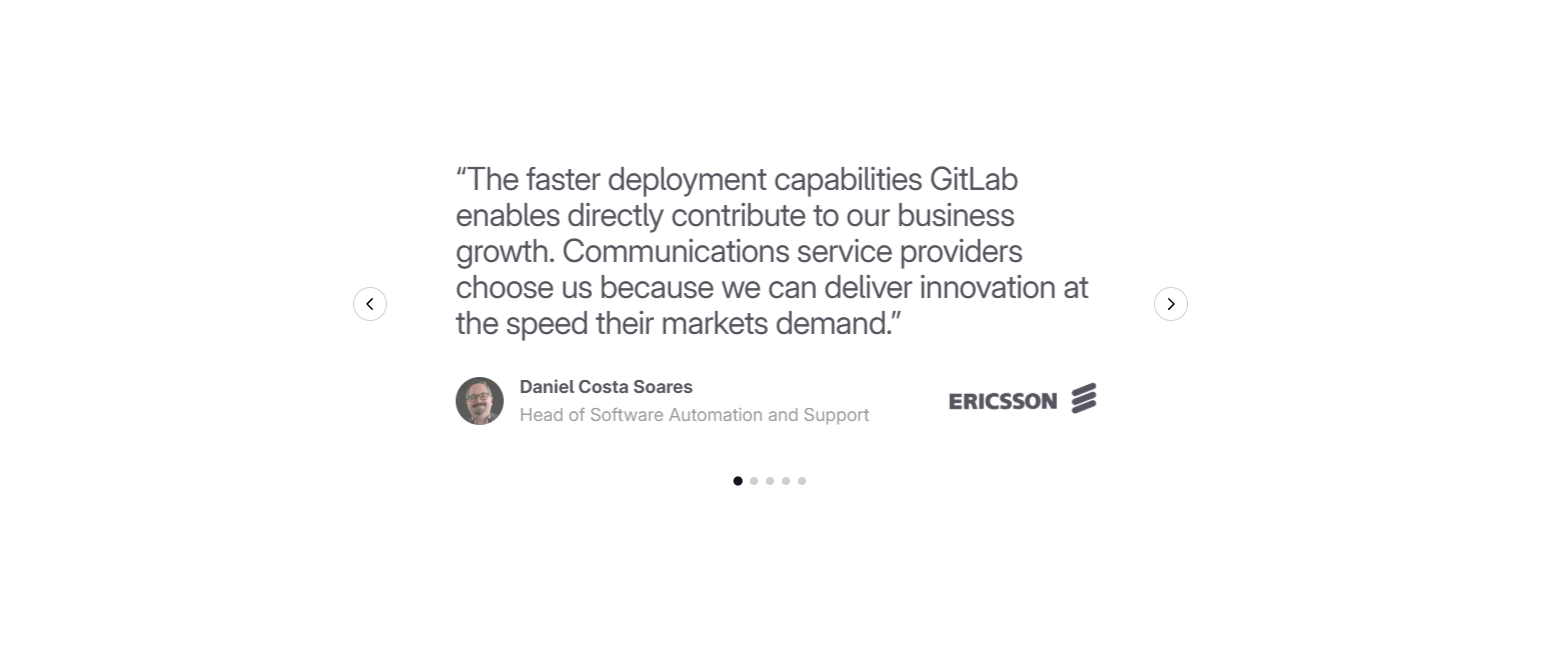
GitLab uses contributor counts and download numbers alongside company logos — because much of their user base came through open source before commercial adoption. Community scale is a form of social proof that pure enterprise tools can’t use.
7. Asana — Logo grid with case study links
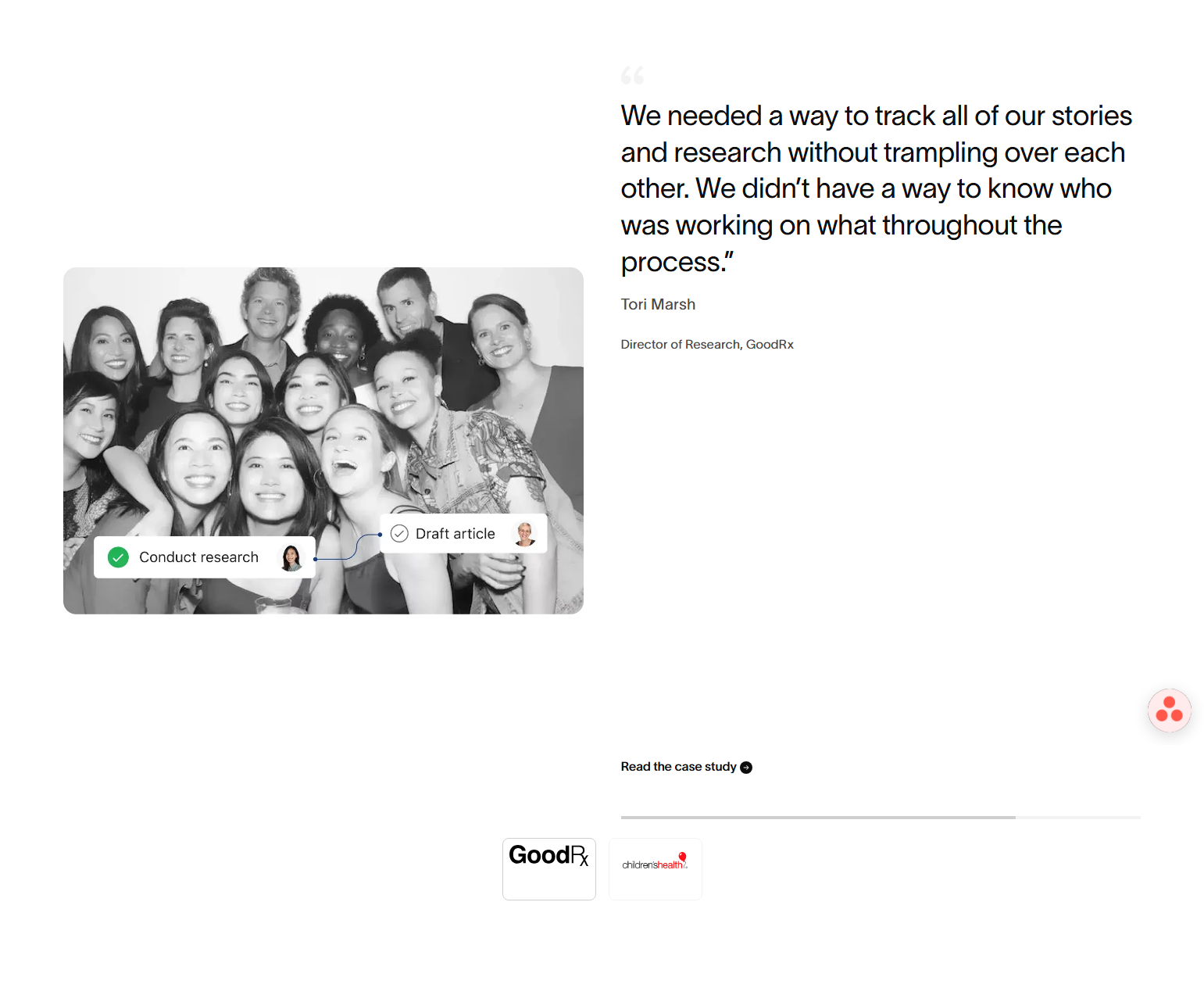
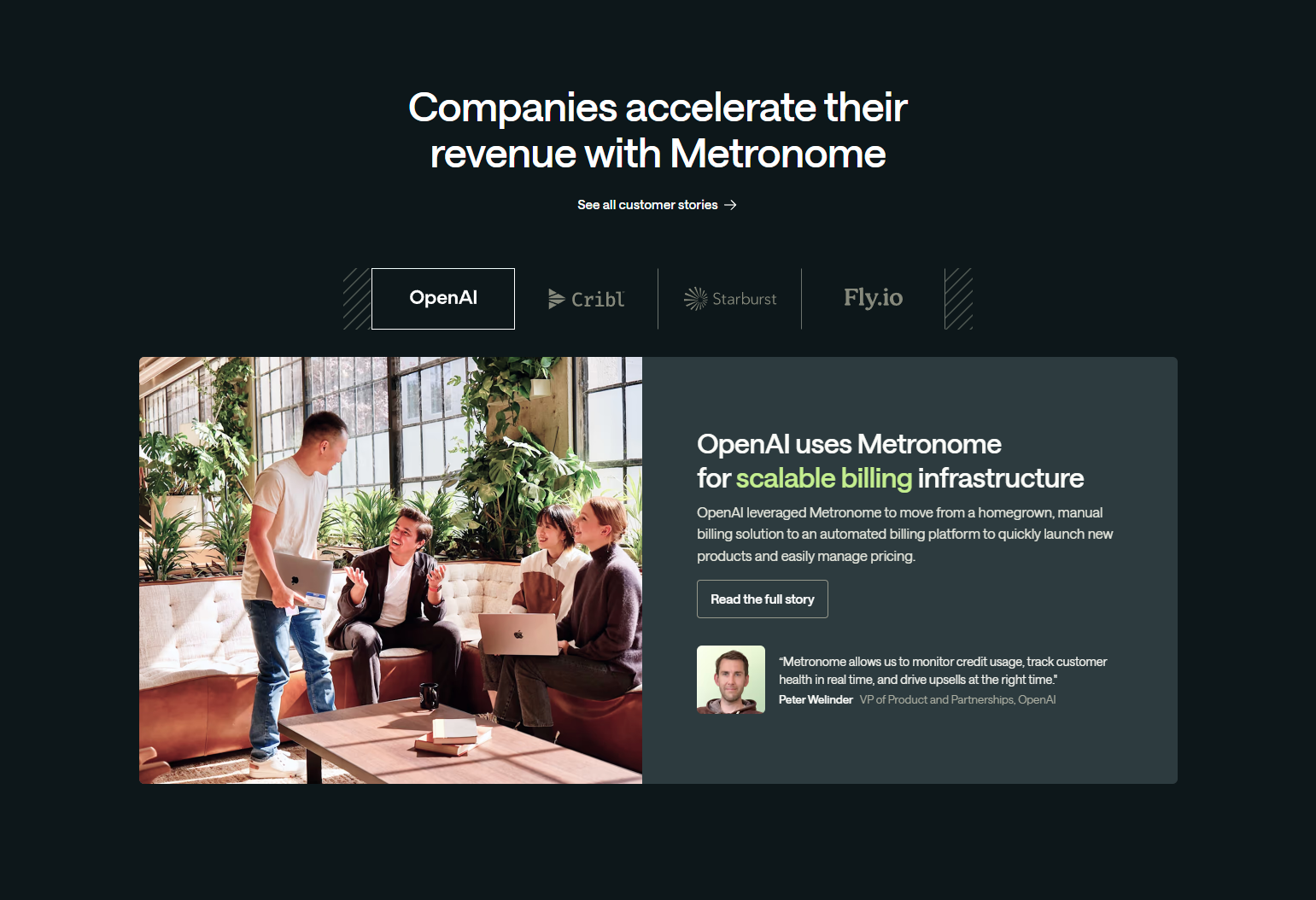
Asana’s logo section links each logo to a case study. Users can click Airbnb’s logo and read the Airbnb case study. This turns a logo grid into a navigation pattern that extends engagement rather than being a passive display.
8. Framer — Community as social proof
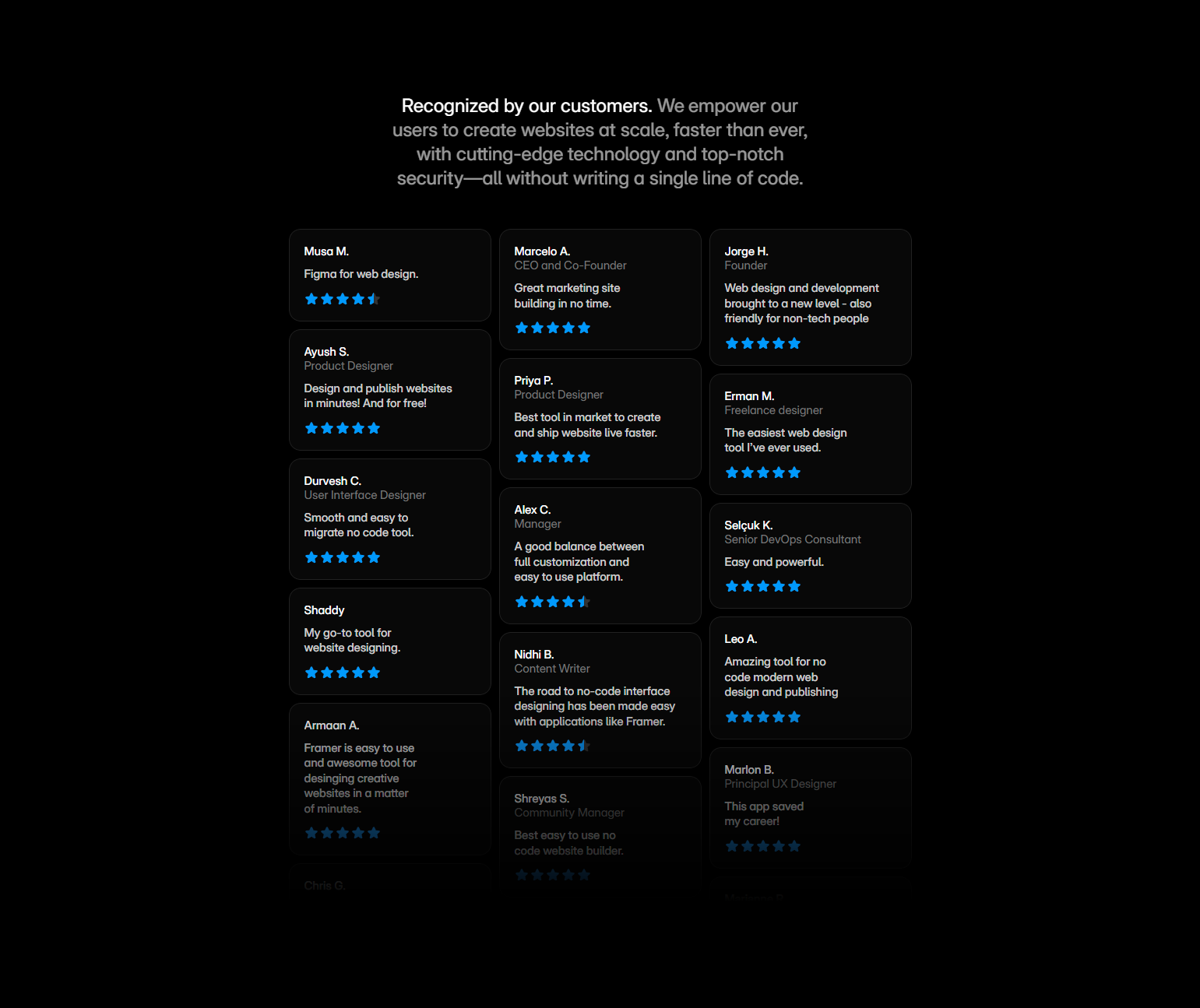
Framer replaces typical B2B logos with user counts from their design community: “Used by 500,000+ designers.” For a consumer-adjacent product, peer volume beats brand name recognition.
Named Testimonials
9. Figma — Design leader testimonials
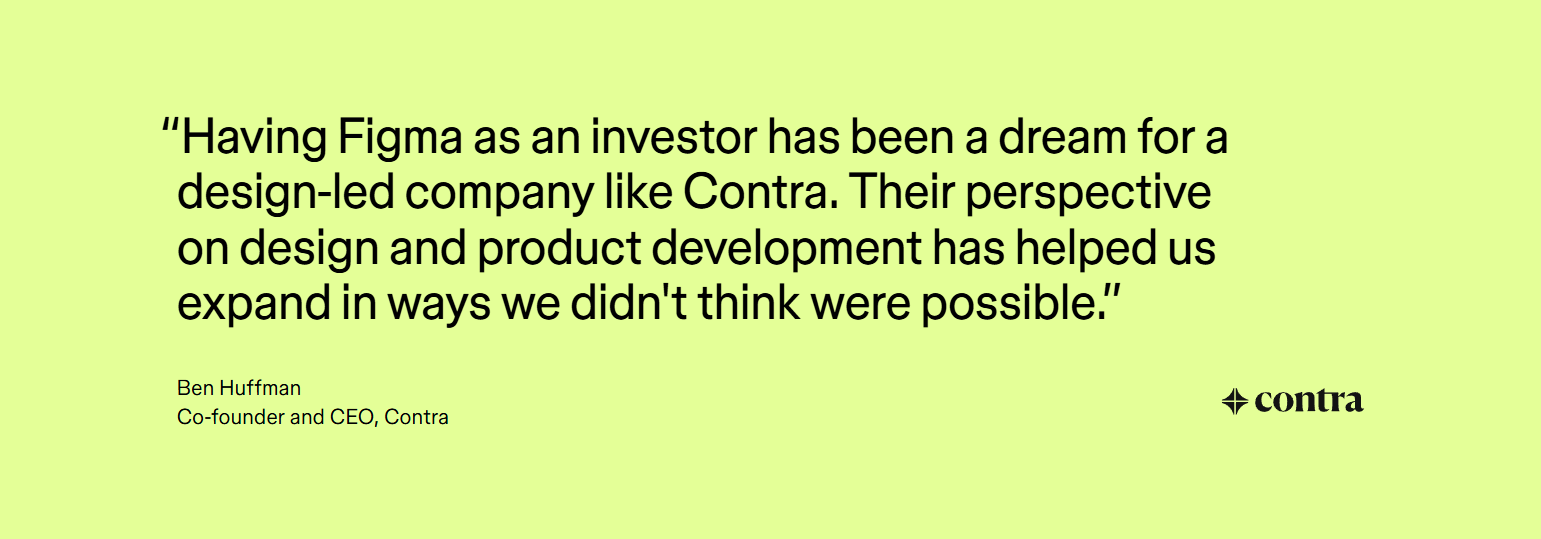
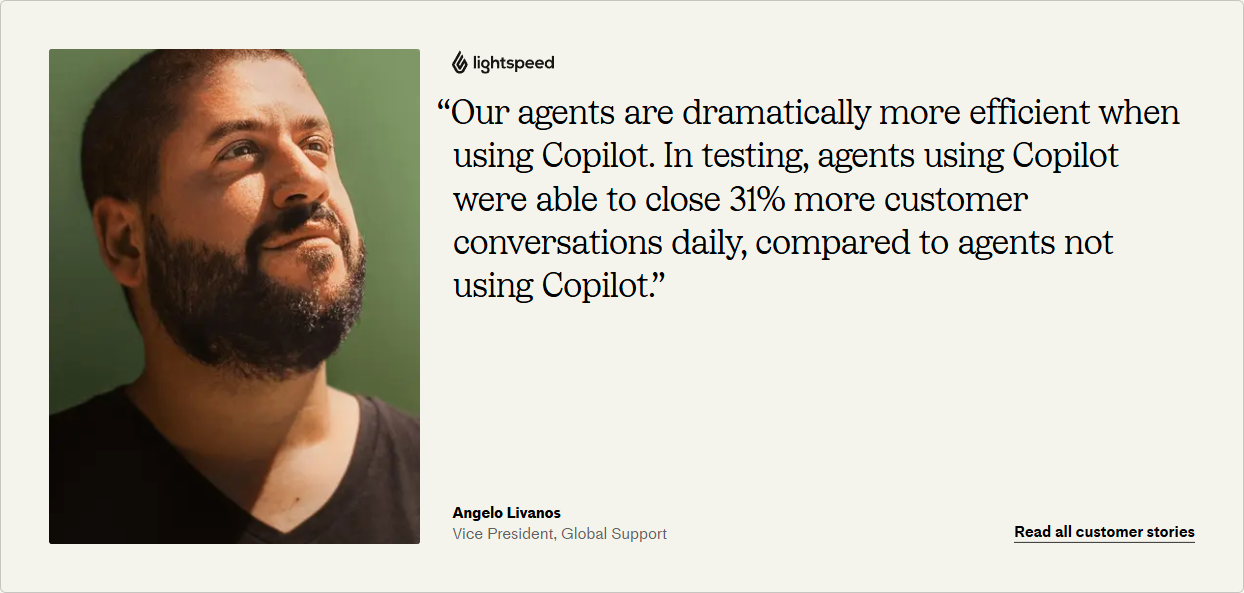
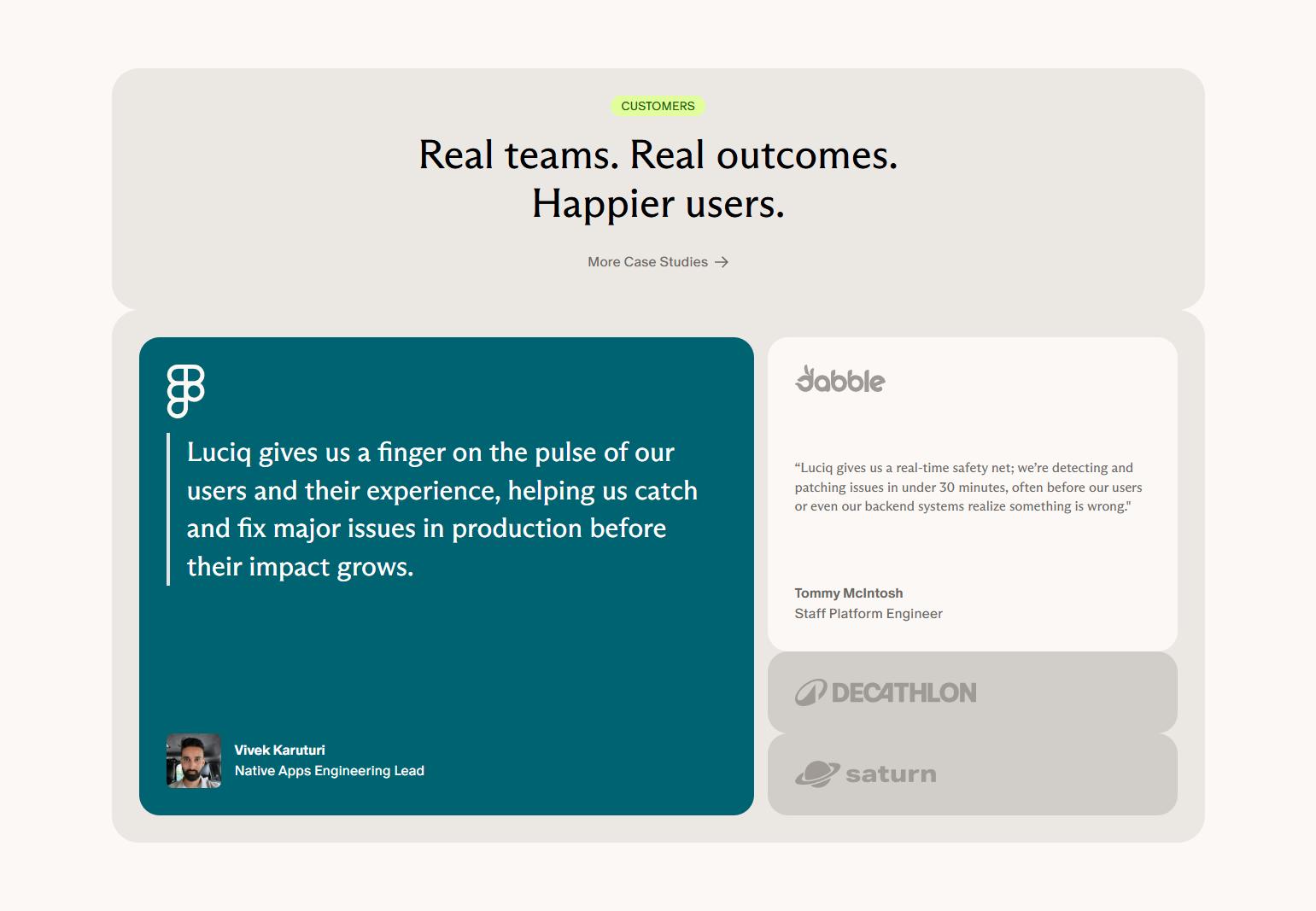
Figma’s testimonials page features quotes from design leaders at well-known companies — heads of design at Slack, Microsoft, Twitter. The quote source IS the social proof: a Head of Design saying “Figma changed how we work” means more than an unnamed company employee.
10. Notion — Role-specific quotes per page

Notion uses different testimonials on different pages. The engineering page features quotes from engineers; the personal productivity page features individual user quotes. Contextually relevant testimonials outperform generic ones.
11. Loom — Async use-case quotes
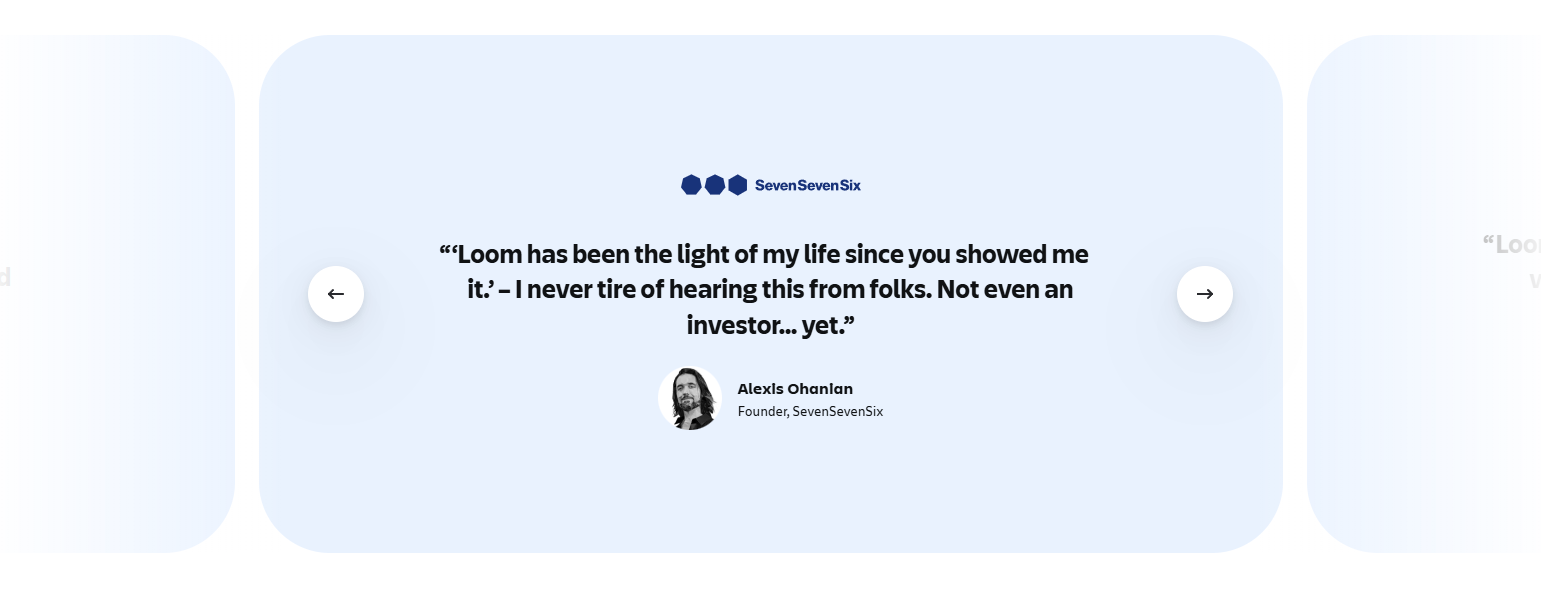
Loom’s testimonials focus on specific async communication wins: “Replaced 3 hours of meetings with a 4-minute Loom.” These quotes describe outcomes, not feelings (“great product”). Outcome quotes are more credible and more persuasive.
12. Hotjar — Specific ROI quotes
Hotjar collects testimonials that include specific numbers: “Conversion rate went from 2.1% to 3.8%.” Specificity adds credibility — made-up testimonials tend to be vague. Real outcomes include specific numbers because real users remember them.
13. FullStory — Enterprise buyer voice

FullStory’s testimonials feature VP and Director-level buyers at recognizable companies. For a product with an enterprise sales motion, having the economic buyer’s voice (not just the user’s voice) on the testimonials page is a different kind of proof.
14. Amplitude — Data team testimonials
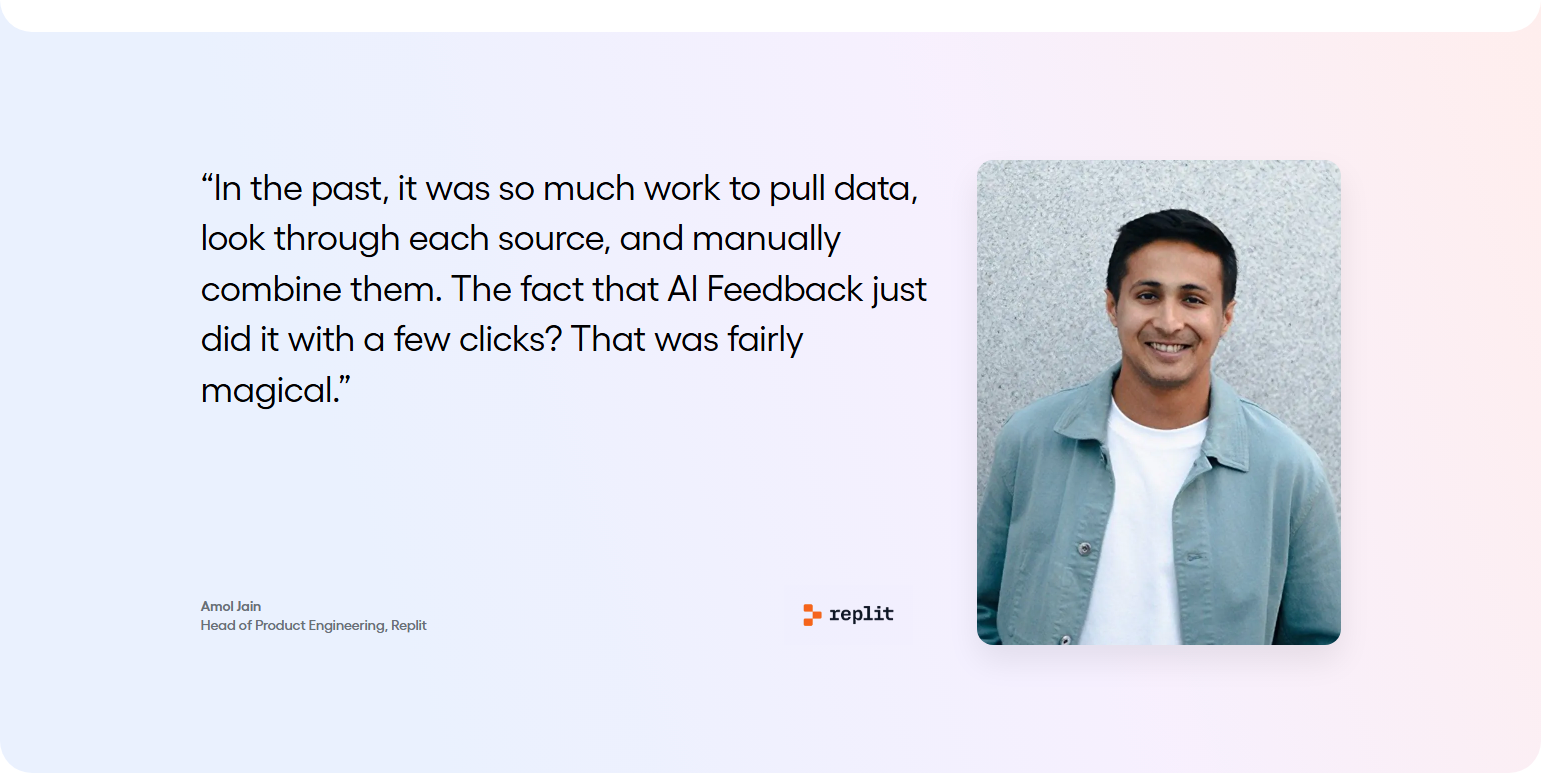
Amplitude features quotes from data scientists and product analysts — the people who actually use the tool, not just the executives who bought it. For technical products, practitioner testimonials are more credible than executive sign-offs.
15. Gong — Revenue outcome focus
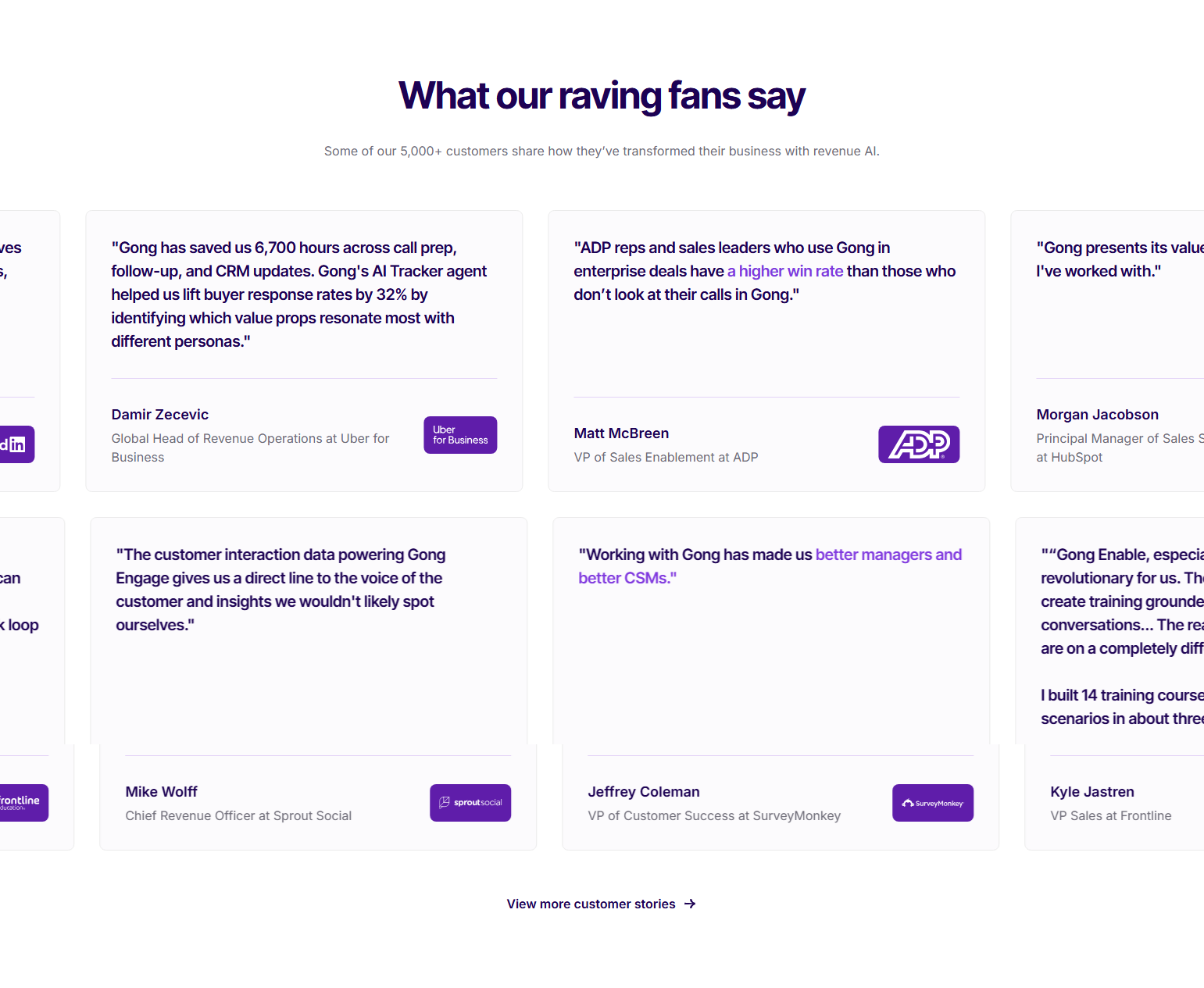
Gong’s testimonials are revenue-first: “Close rate went up 23%,” “Our reps hit quota 40% more often.” Gong sells to sales leaders who measure everything in pipeline and close rates. The testimonials speak their language exactly.
16. Close — Sales rep voice
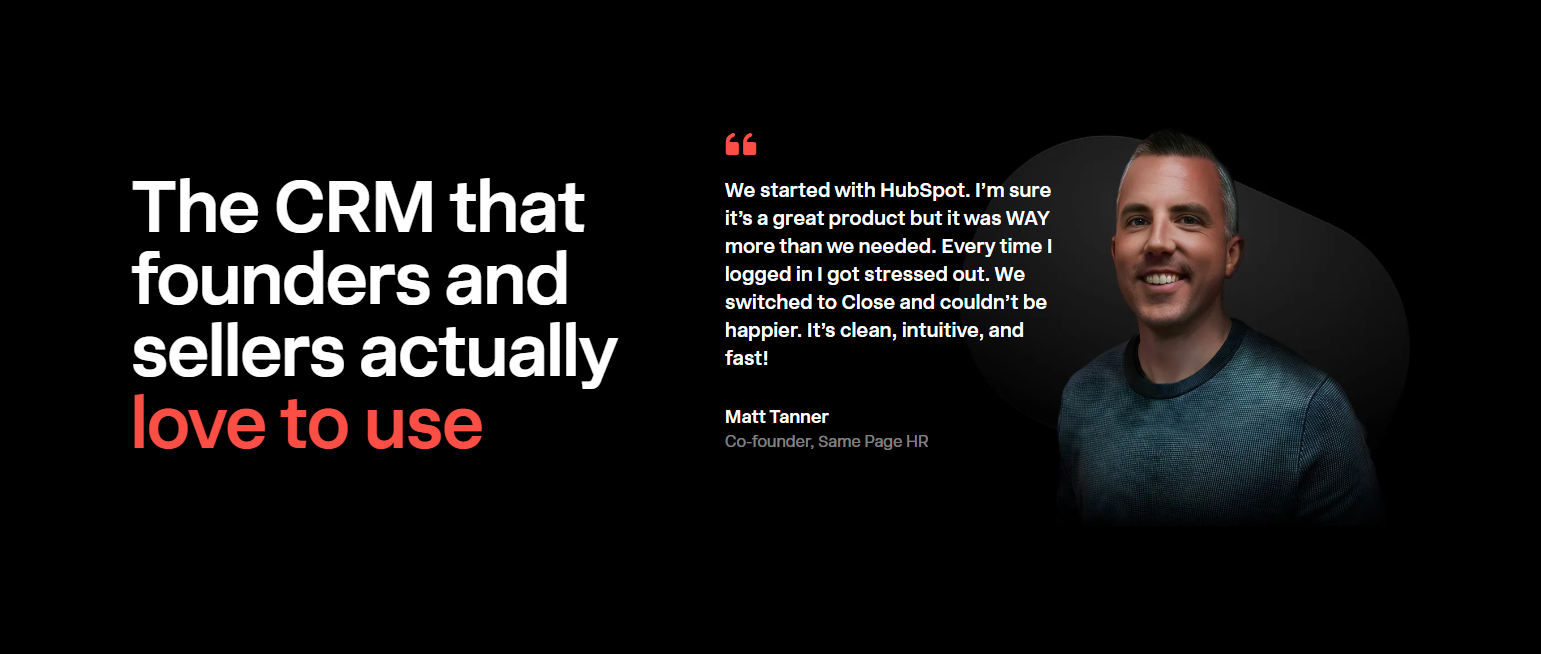
Close (a CRM for small sales teams) uses testimonials from sales reps and sales managers — not CIOs. “I’ve tried 6 CRMs and Close is the only one my reps actually use” speaks directly to the adoption problem every CRM buyer faces.
17. Calendly — Time-saved framing
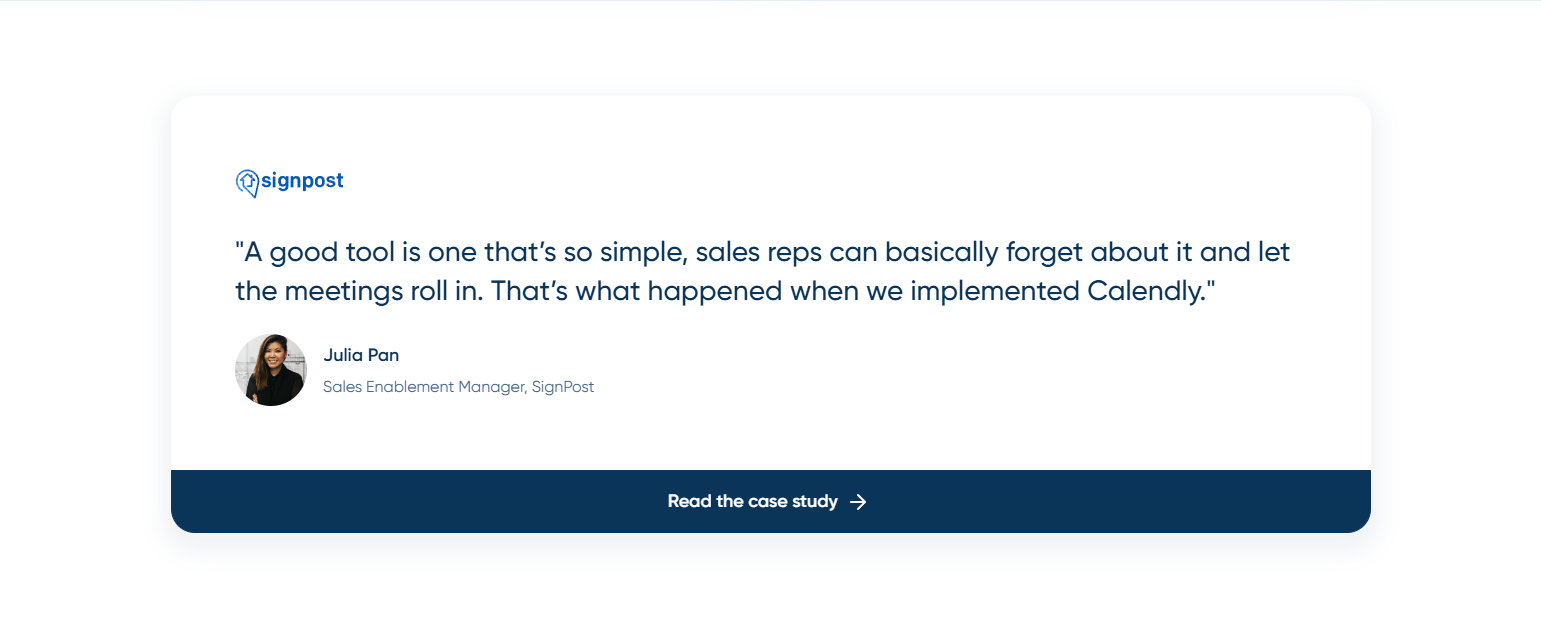
Calendly testimonials focus on meeting scheduling time saved: “Scheduling took 15 minutes per meeting. Now it takes 15 seconds.” Before-and-after time comparisons are one of the most persuasive testimonial formats because they quantify the inefficiency being solved.
18. Chargebee — Billing complexity reduction
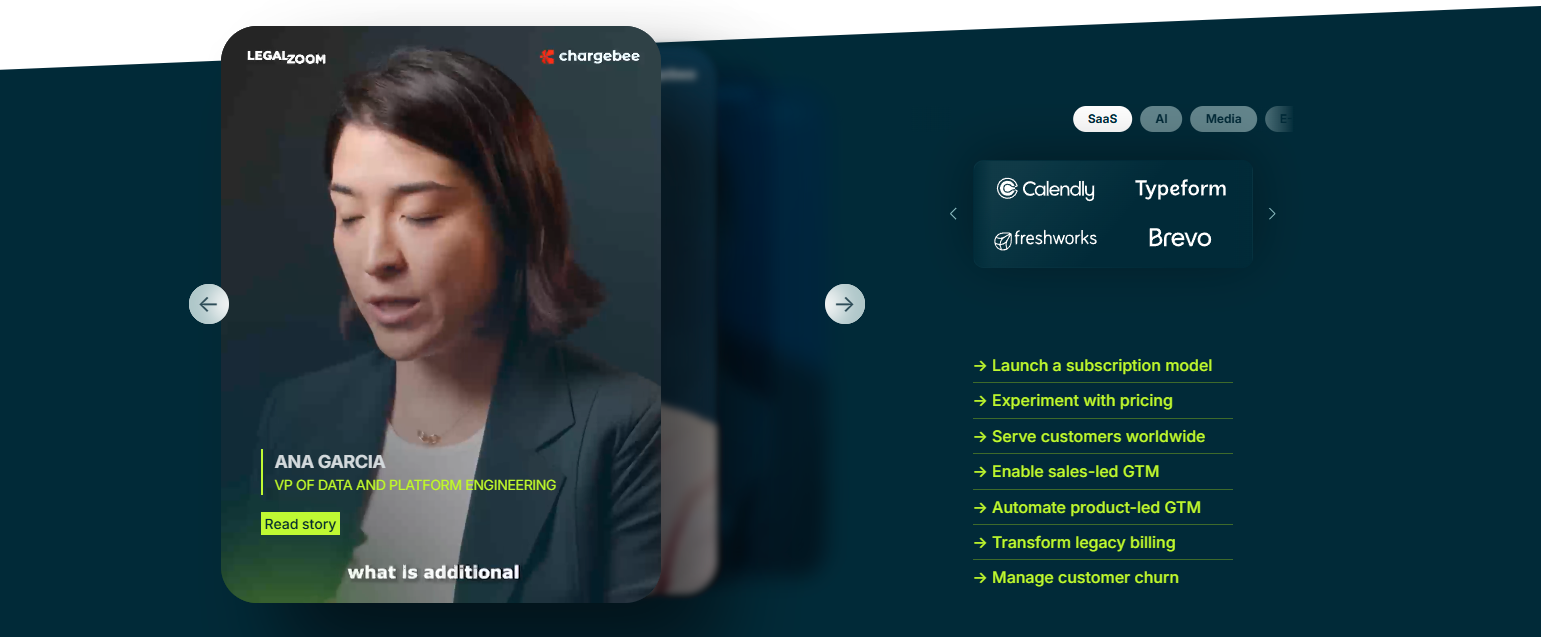
Chargebee testimonials reference the specific billing complexity that was eliminated: “We handle 14 currencies across 8 countries. Chargebee makes it feel like one.” Complexity-specific testimonials signal to prospects with the same problem: this was built for you.
Review Badges and Ratings
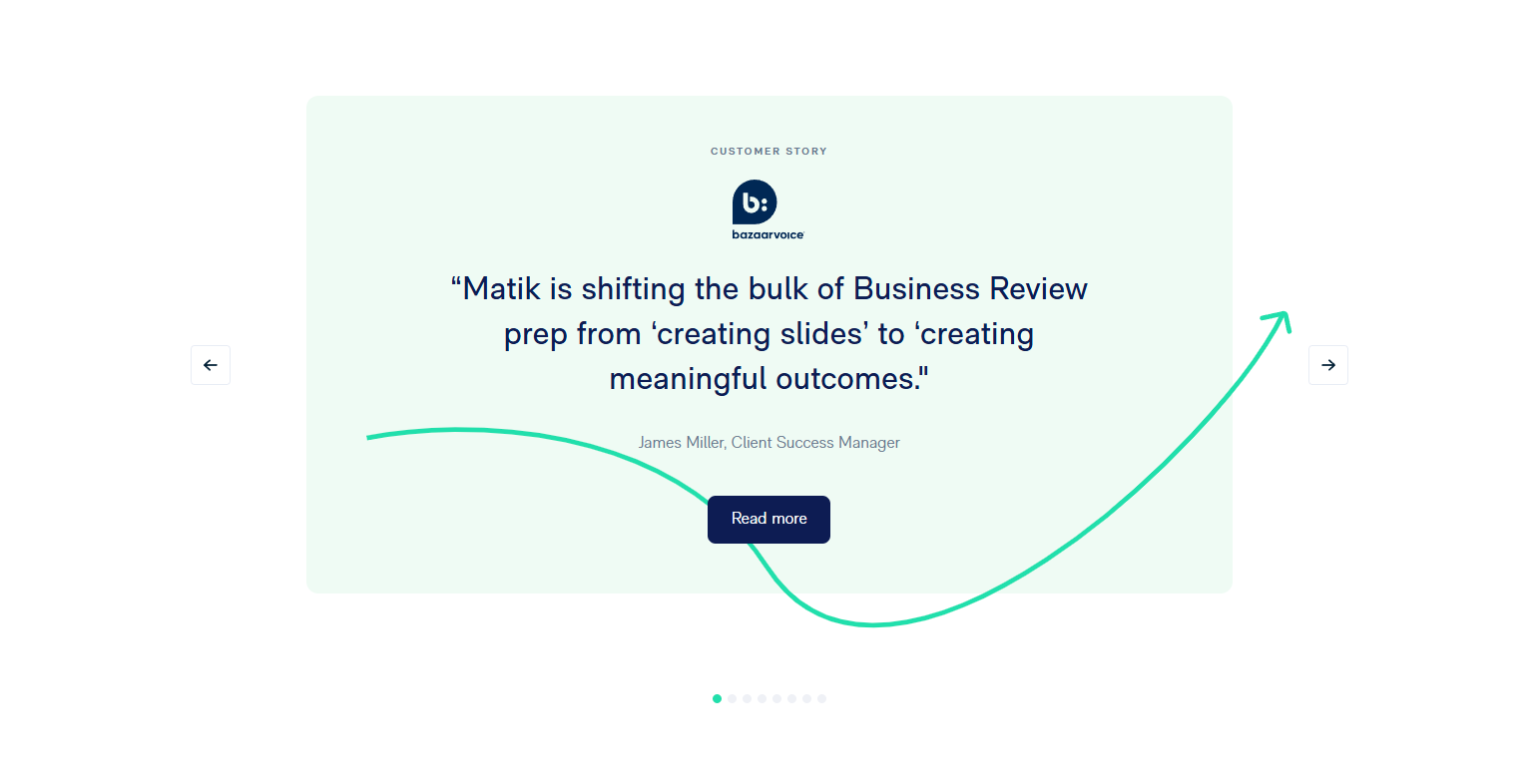
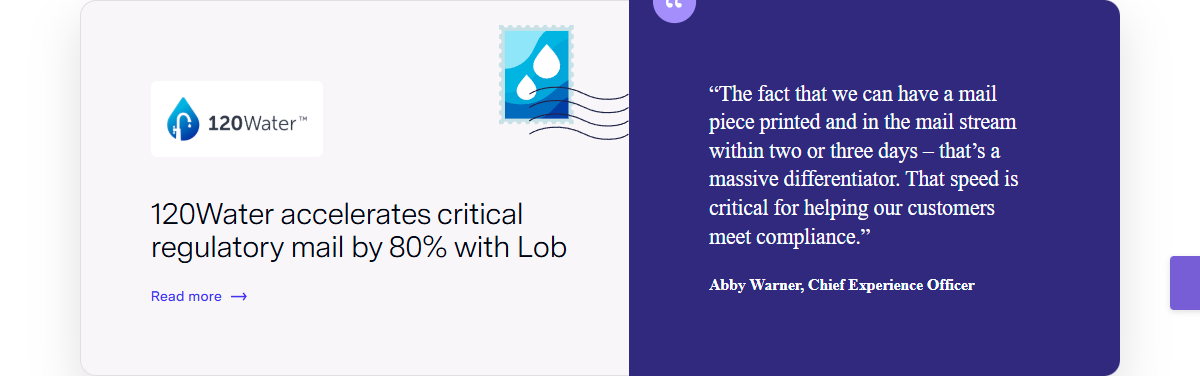
19. Intercom — G2 leader badges
Intercom prominently displays G2 Leader badges in the top categories they compete in. G2 badges are third-party proof that doesn’t require trusting the company’s own claims — useful for prospects who are already comparing products on G2.
20. Freshworks — Multi-platform review badges
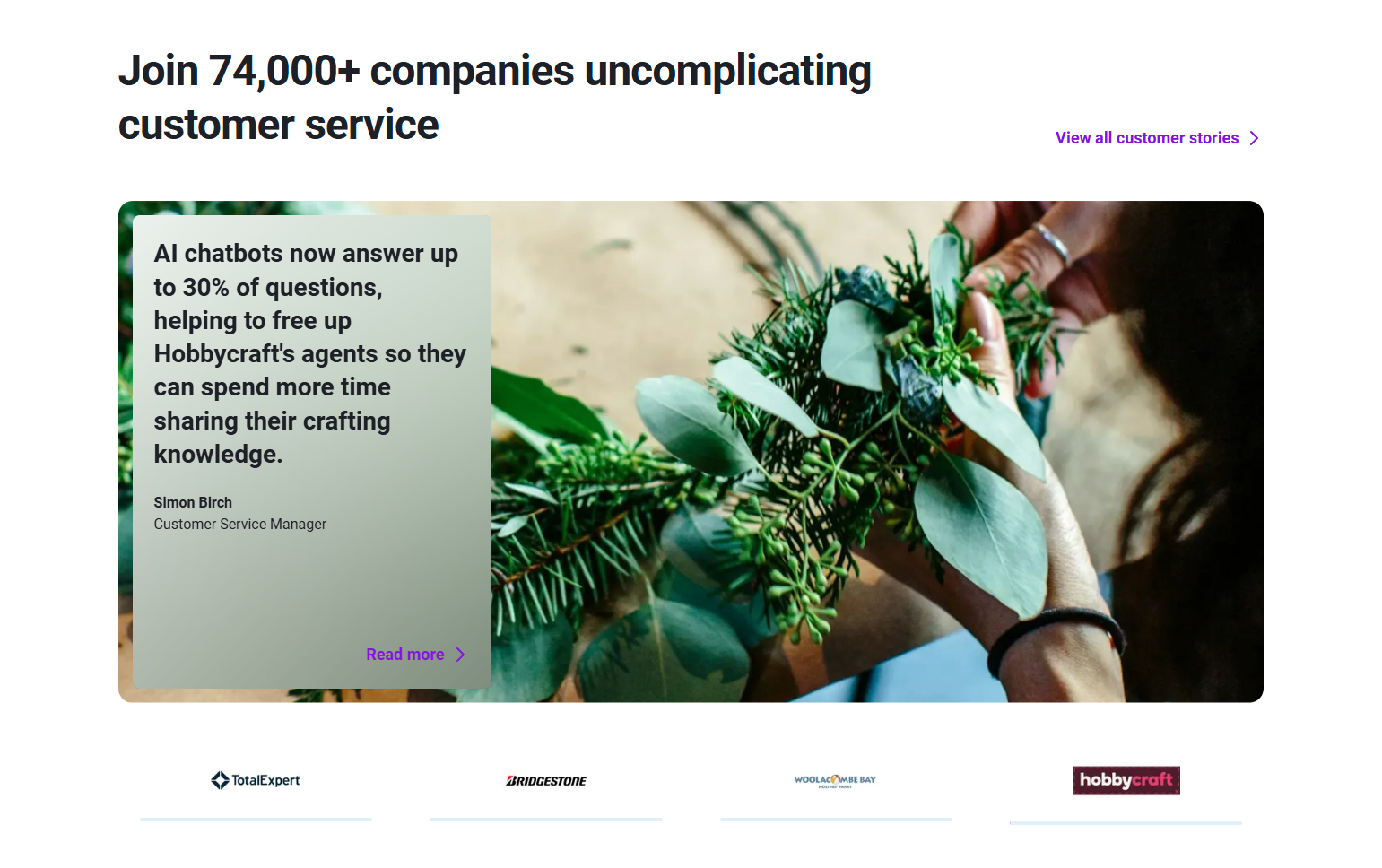
Freshworks displays G2, Capterra, and GetApp badges in a row. For SMB buyers who research on multiple platforms, seeing consistent ratings across platforms is more convincing than a single badge from one source.
21. ActiveCampaign — Rating with review count
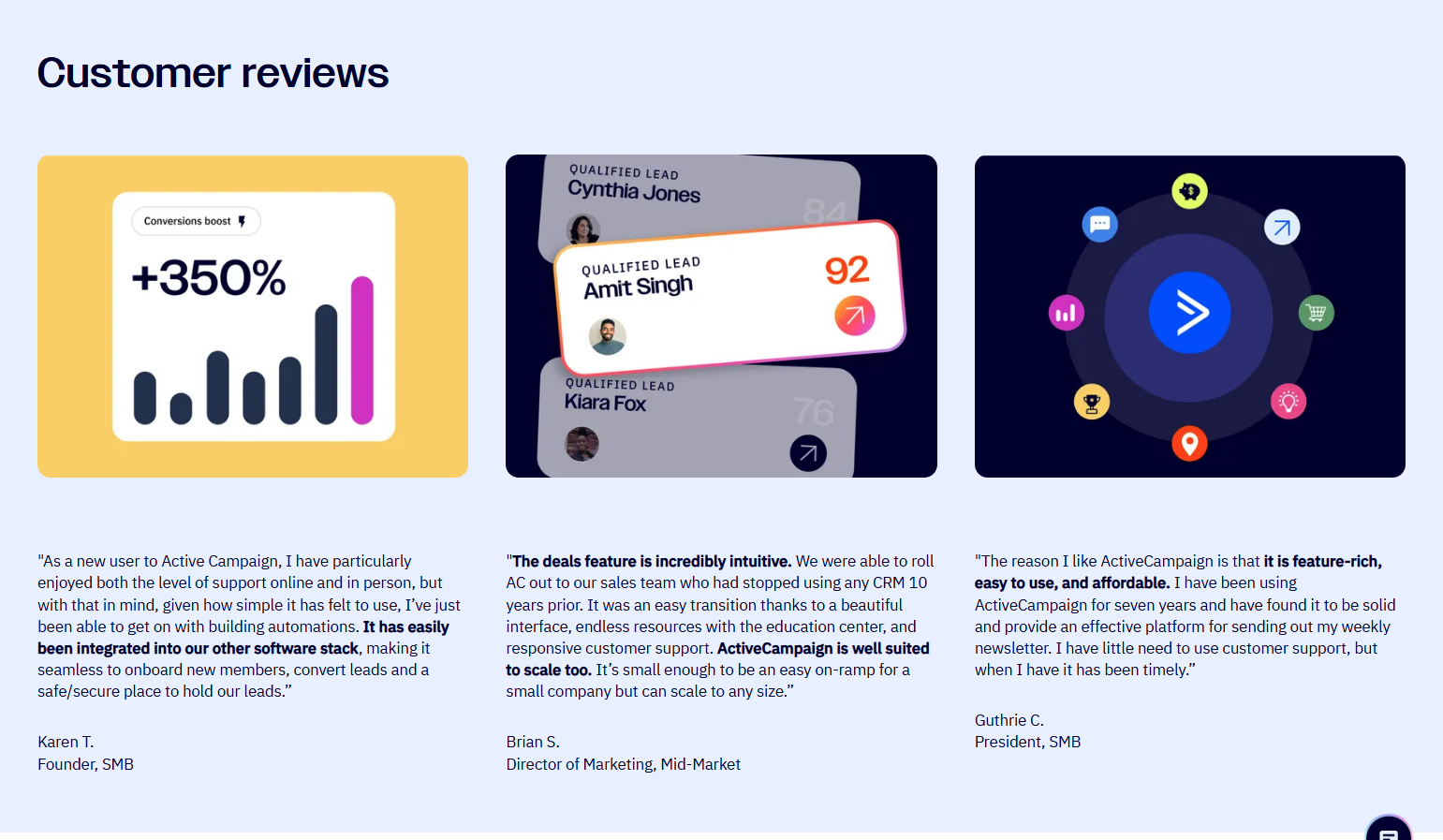
ActiveCampaign shows “4.6 stars from 10,847 reviews” — the star rating + review volume combination. Volume matters: 4.8 stars from 47 reviews is less convincing than 4.5 stars from 10,000 reviews.
See ActiveCampaign on SaaS Boat
22. Customer.io — G2 category position
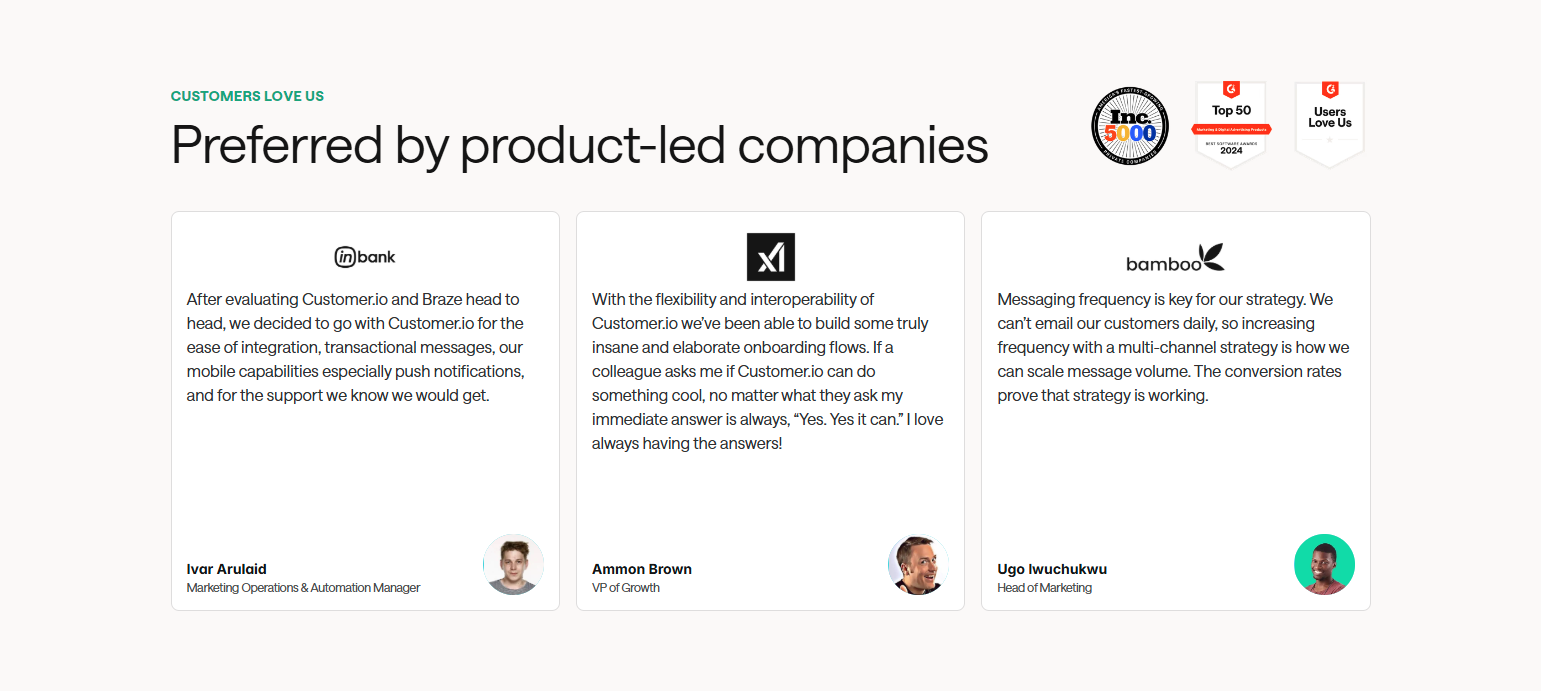
Customer.io displays “Leader in Marketing Automation” with the G2 grid visualization showing their relative position. The visualization is more compelling than a badge because it shows position relative to competitors.
23. Dashlane — Security certification badges
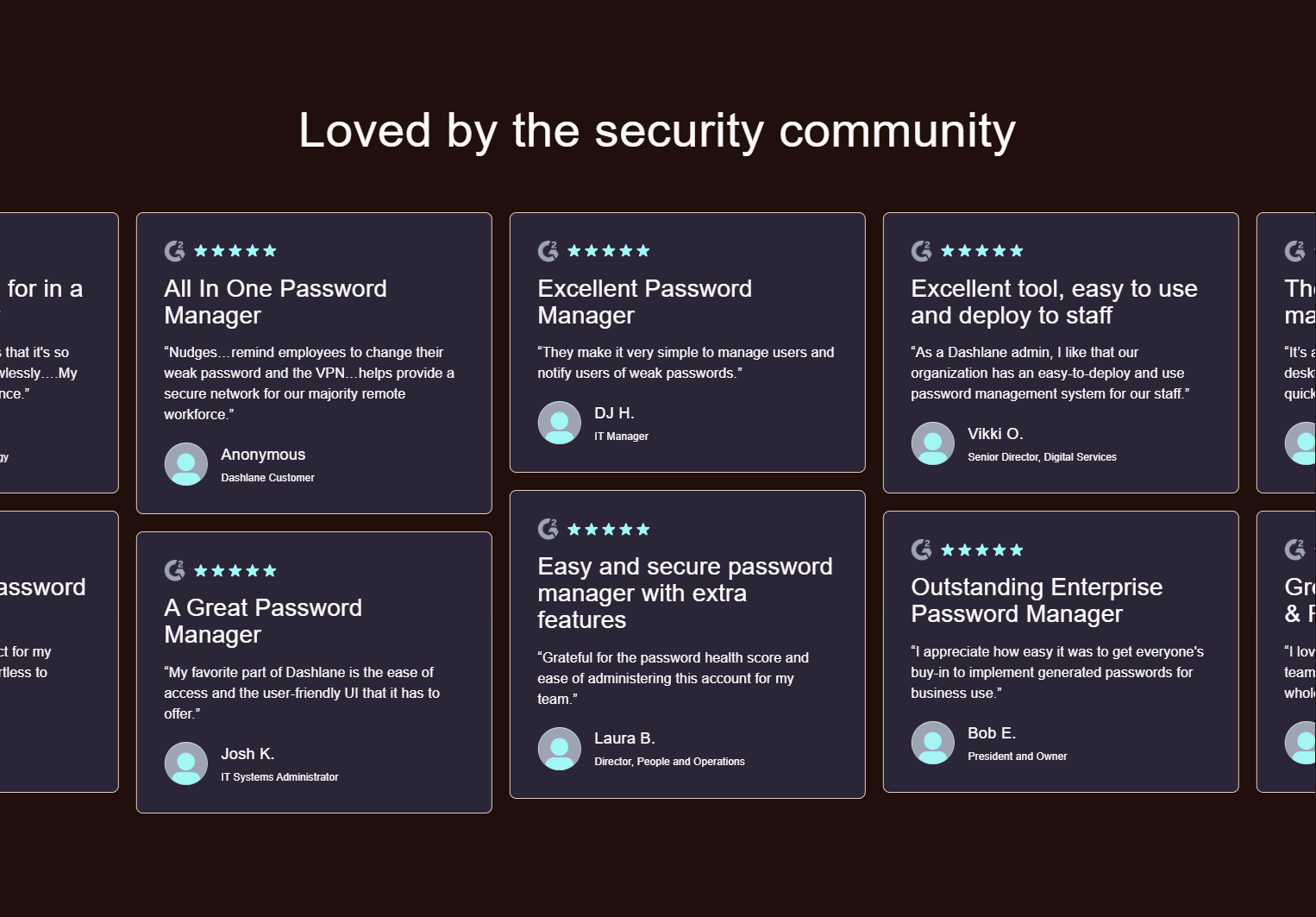
Dashlane uses SOC 2 Type II and other security certifications alongside user testimonials. For a security-sensitive product, compliance certifications are a category of social proof that review badges can’t substitute for.
Video Testimonials
24. Miro — Team story videos
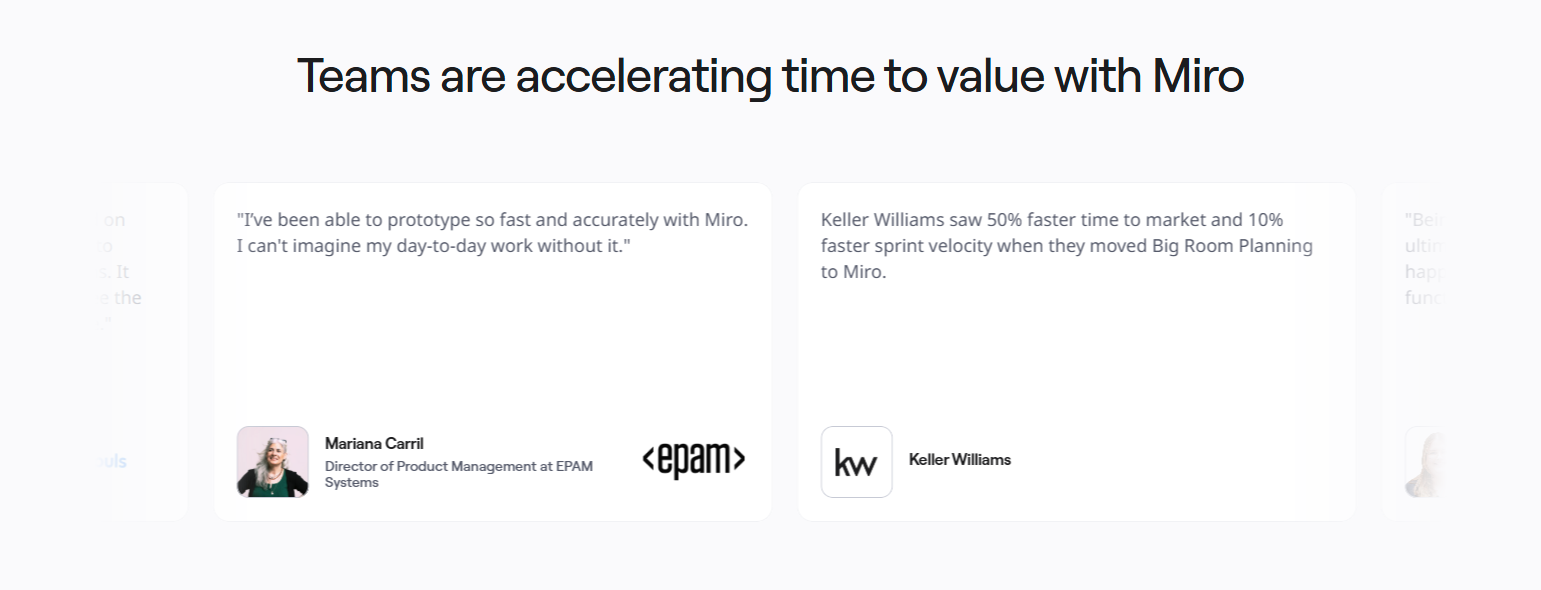
Miro embeds short video testimonials where teams walk through how they use Miro for specific processes. Video makes the testimonial ambient: you see the product being used, hear the enthusiasm, watch a real person who isn’t a professional spokesperson.
25. Loom — Loom-recorded testimonials
Loom collects video testimonials recorded in Loom. This is a product-market demonstration loop: the testimonial format is itself the product. Watching someone explain Loom’s value with a Loom video is more convincing than text.
26. Lattice — HR leader video stories
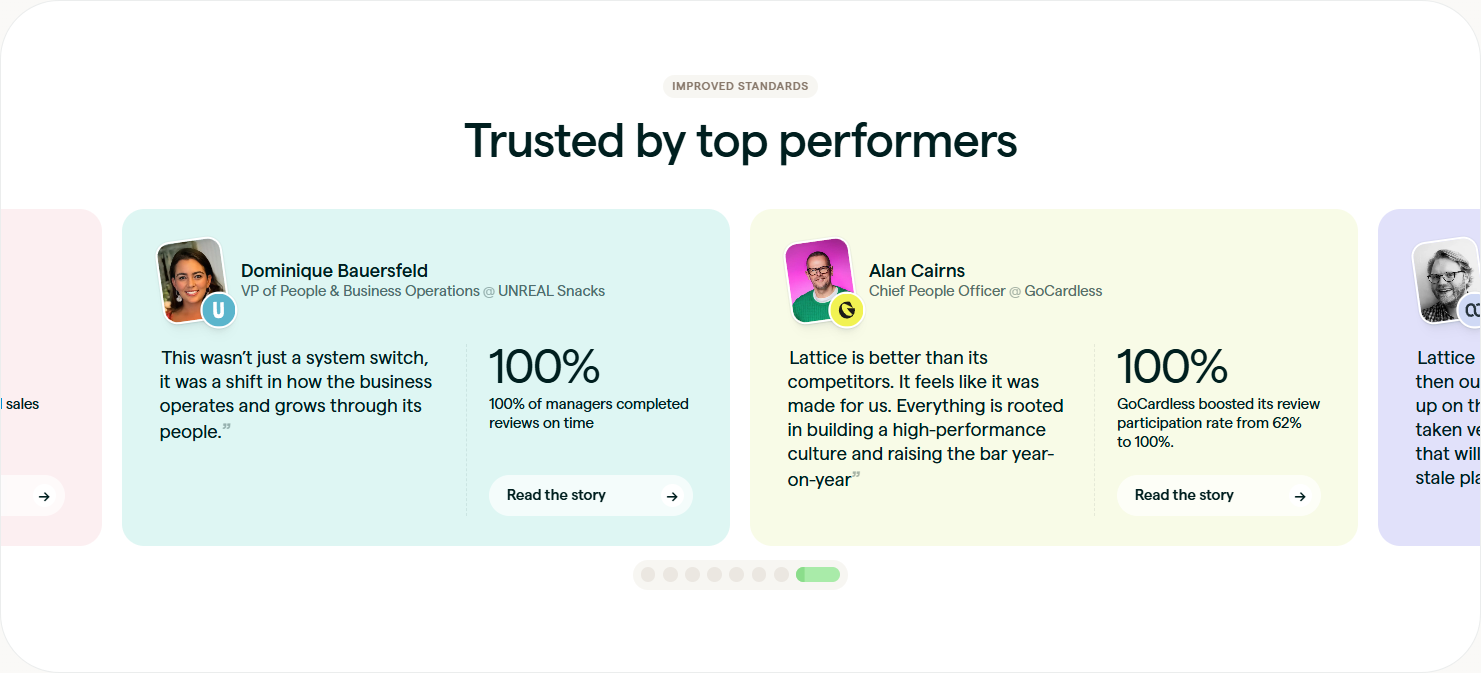
Lattice features VP HR and Chief People Officers in video testimonials because these are Lattice’s buyers. Seeing your counterpart (same title, same function, similar company stage) explain the product builds more trust than a CEO soundbite.
27. Rippling — ROI breakdown videos
Rippling uses testimonial videos that include specific ROI claims: hours saved on admin, headcount avoided, compliance issues resolved. For an HR platform with a complex value proposition, video is the right medium for nuanced claims.
Case Study Previews
28. Asana — Impact metric cards
Asana’s case study previews show three metrics in card format: “40% reduction in meetings,” “30% increase in project completion,” “2x faster onboarding.” These aren’t buried in a full case study PDF — they’re surface-level proof at the scroll point.
29. GitLab — Code velocity outcomes
GitLab’s case study previews focus on development speed: “Deployment frequency increased 4x,” “MTTR reduced by 60%.” For developer tooling, velocity metrics are the currency of credibility.
30. Datadog — Scale-first case studies
Datadog’s case study previews lead with infrastructure scale: “Monitoring 500,000 hosts,” “Processing 10 billion events/day.” For an observability tool, scale signals capability — the more extreme the case study, the more capability is implied.
31. Sentry — Error reduction outcomes
Sentry’s case study previews feature specific reliability improvements: “85% reduction in production errors,” “P99 latency cut by 40%.” Developer tools need developer metrics in their social proof. Sentry knows their audience.
32. Netlify — Build time improvements
Netlify case study cards show build time and deployment frequency improvements. For a hosting platform, these are the metrics engineers care about before choosing infrastructure.
Inline/Contextual Social Proof
33. Webflow — Testimonials adjacent to feature sections
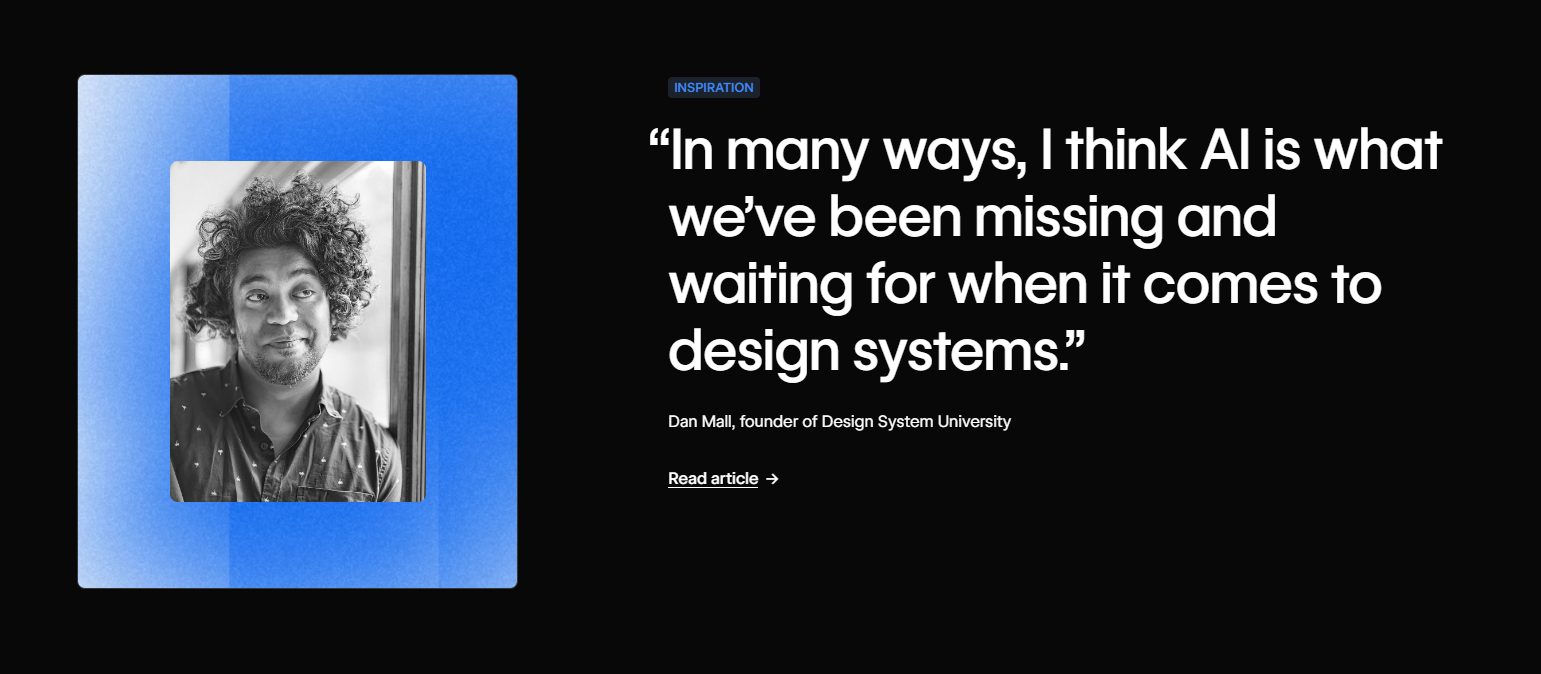
Webflow places relevant testimonials directly beside the feature they describe: a “no code” testimonial beside the visual editor, a “speed” testimonial beside the hosting section. Contextual placement means the proof is timely, not orphaned on a testimonials page.
34. Hotjar — Live user count on signup page
Hotjar shows a live counter (“Join 1.3 million teams”) on the signup page, adjacent to the form. Social proof at the moment of commitment (not before it) addresses doubts at peak decision anxiety.
35. Auth0 — Developer community size
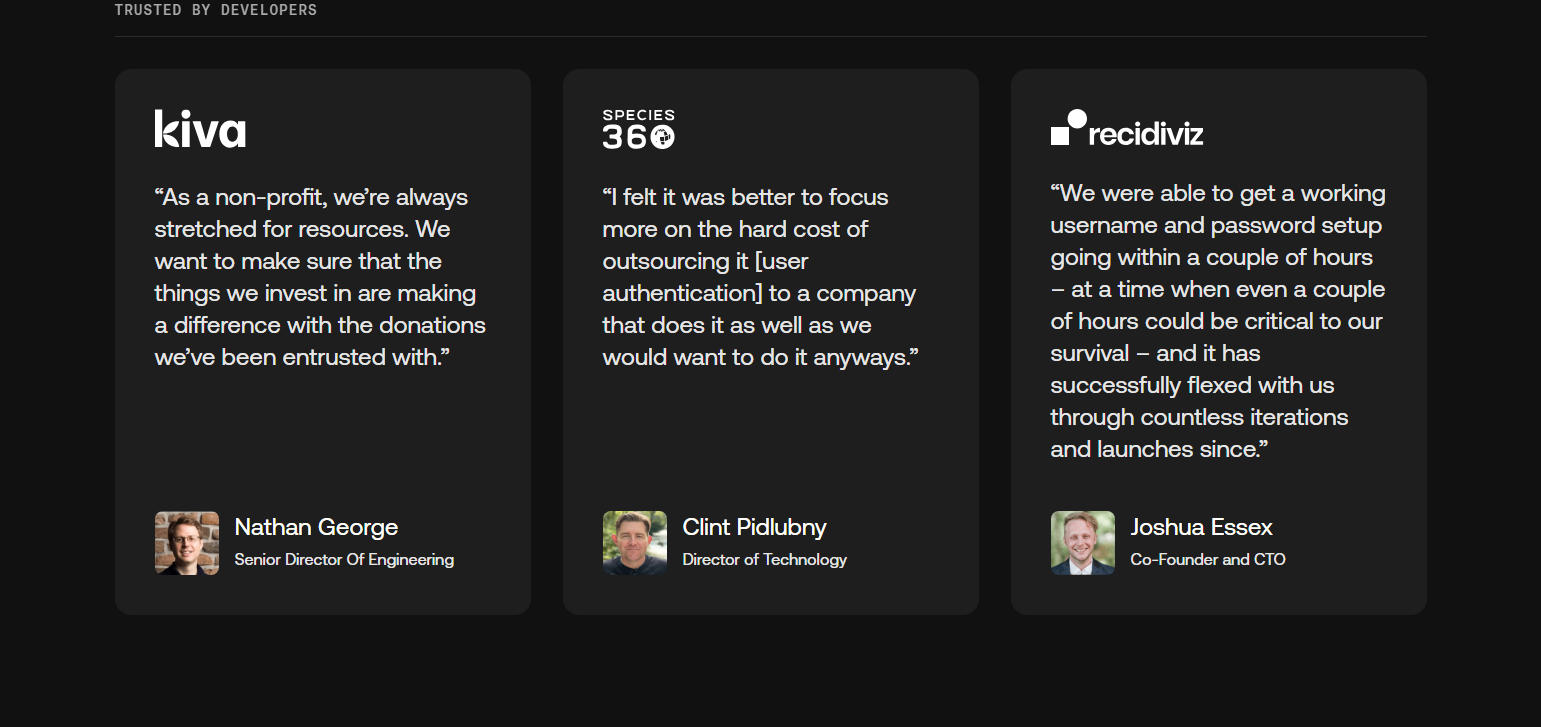
Auth0 displays developer community numbers (users, GitHub stars, npm downloads) alongside testimonials. For a developer tool, community metrics are credibility signals that executive quotes aren’t.
36. Canva — User count in hero

Canva’s hero includes “150 million users” as a hard number. At that scale, user counts are self-explanatory social proof: no one uses something that 150 million people use unless it’s good.
37. Zoom — Meeting count as proof
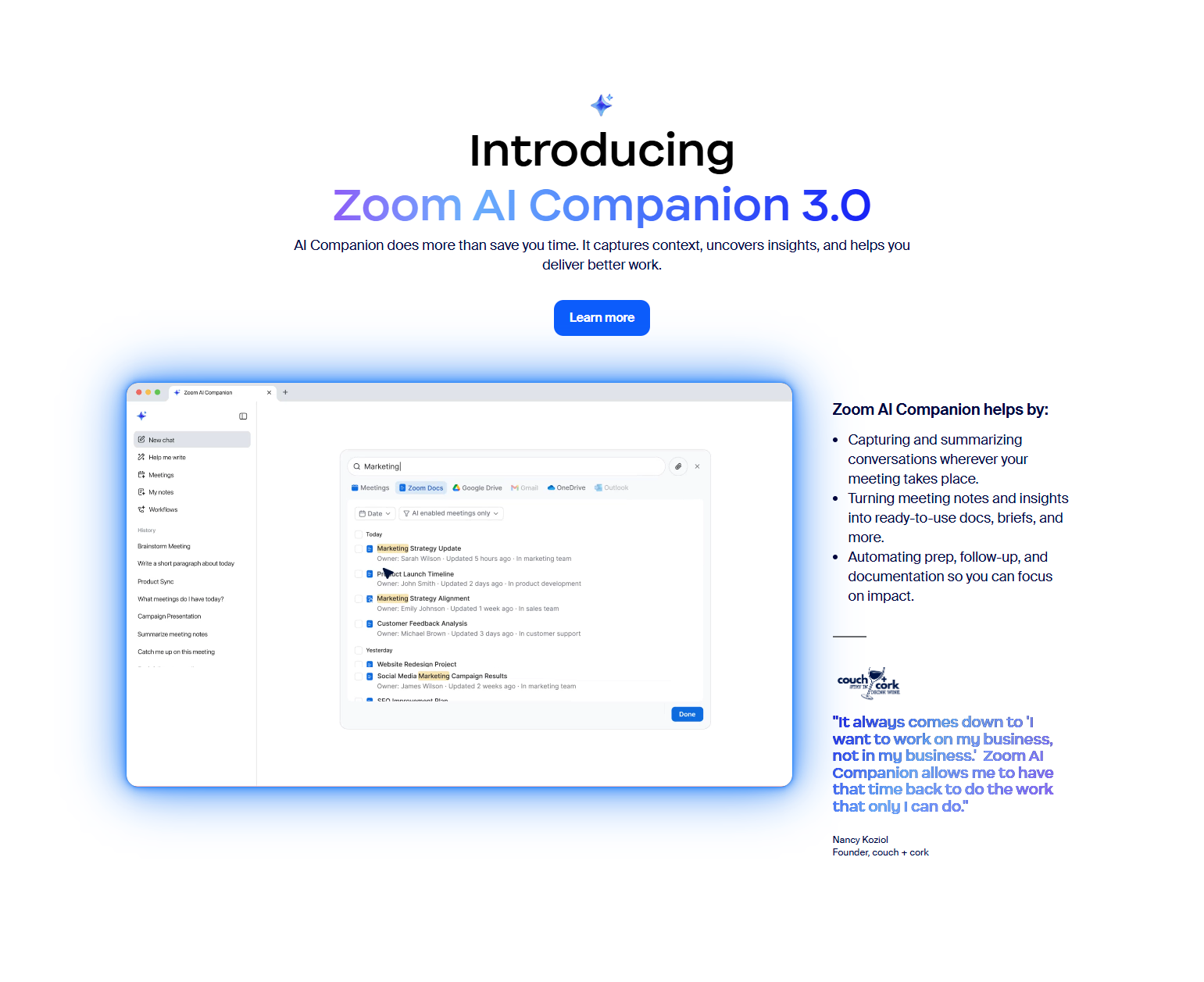
Zoom has displayed cumulative meeting minutes hosted as a live counter. Using product usage data as social proof is uniquely credible: you can’t fake meeting count data at that scale.
38. Figma — File count in community
Figma’s community page shows file counts, remixes, and viewer numbers. Product usage stats in the product itself are a form of social proof that persists in the product, not just on the marketing site.
Comparison-Based Social Proof
39. GitLab — “Migrate from GitHub” as social proof frame
GitLab’s testimonials on their migration page feature companies that switched from GitHub. The testimonial subject IS the migration decision — it directly mirrors the prospect’s current situation.
40. ActiveCampaign — “Switched from Mailchimp” quotes
ActiveCampaign collects testimonials specifically from former Mailchimp users. Competitor-specific testimonials address the comparison objection at the exact moment it arises.
See ActiveCampaign on SaaS Boat
41. Close — “Finally a CRM my team uses”
Close’s testimonials reference prior CRM failures explicitly. “I’ve tried Salesforce, HubSpot, Pipedrive. Close is the first one my team actually opened every day.” Prior-product references are a form of comparison-based proof.
Niche and Specialized Social Proof
42. Gusto — Accountant partner testimonials

Gusto features testimonials from accountants and bookkeepers who recommend Gusto to clients. Third-party professional endorsements are a distinct proof type: an accountant recommending a payroll tool is more credible than a business owner reviewing one.
43. Dashlane — Security researcher endorsements
Dashlane features quotes from security researchers and cybersecurity professionals. Expert endorsements from people with relevant technical credibility are more convincing than CEO quotes for security-sensitive buyers.
44. BrowserStack — QA and testing team focus
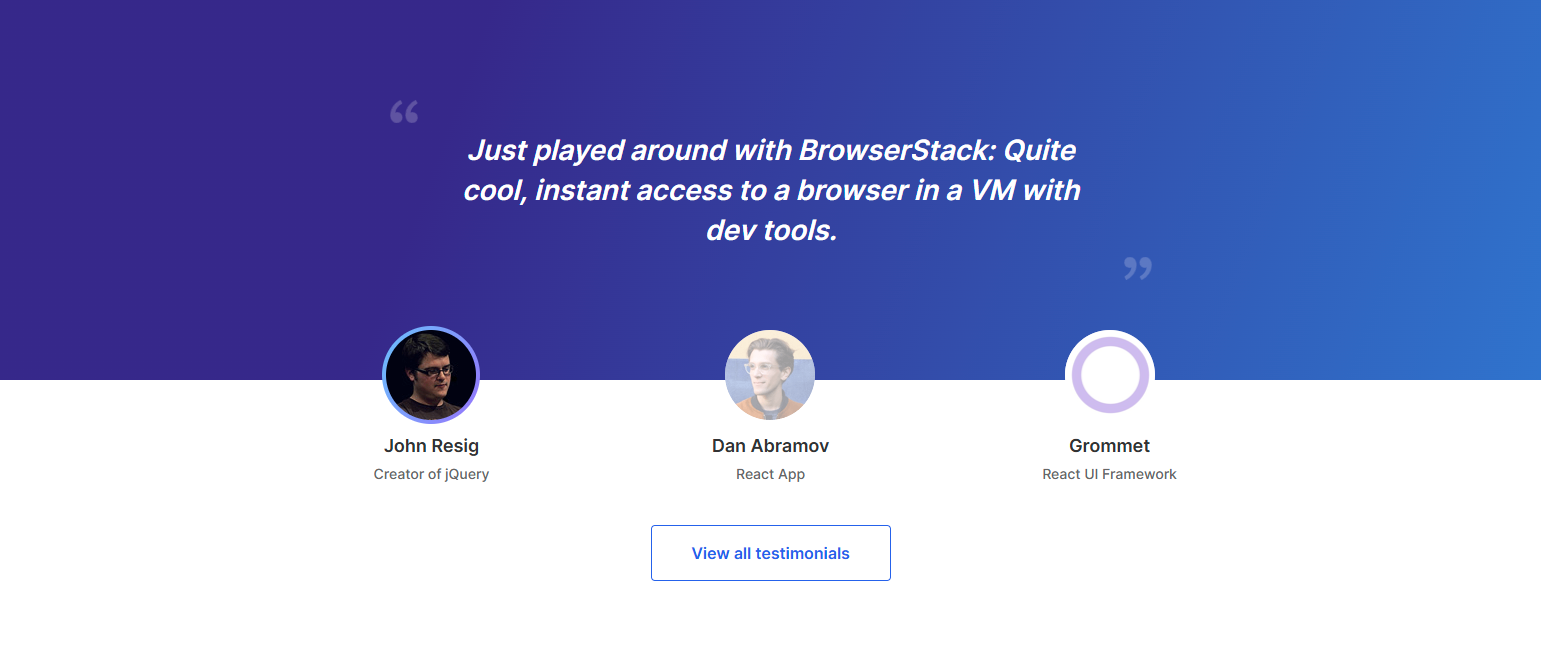
BrowserStack testimonials feature QA engineers and test leads — the practitioners. For a testing tool, the practitioner’s endorsement matters more than an executive’s: the practitioners are the ones who have to live with the tool.
45. Whimsical — Facilitator endorsements
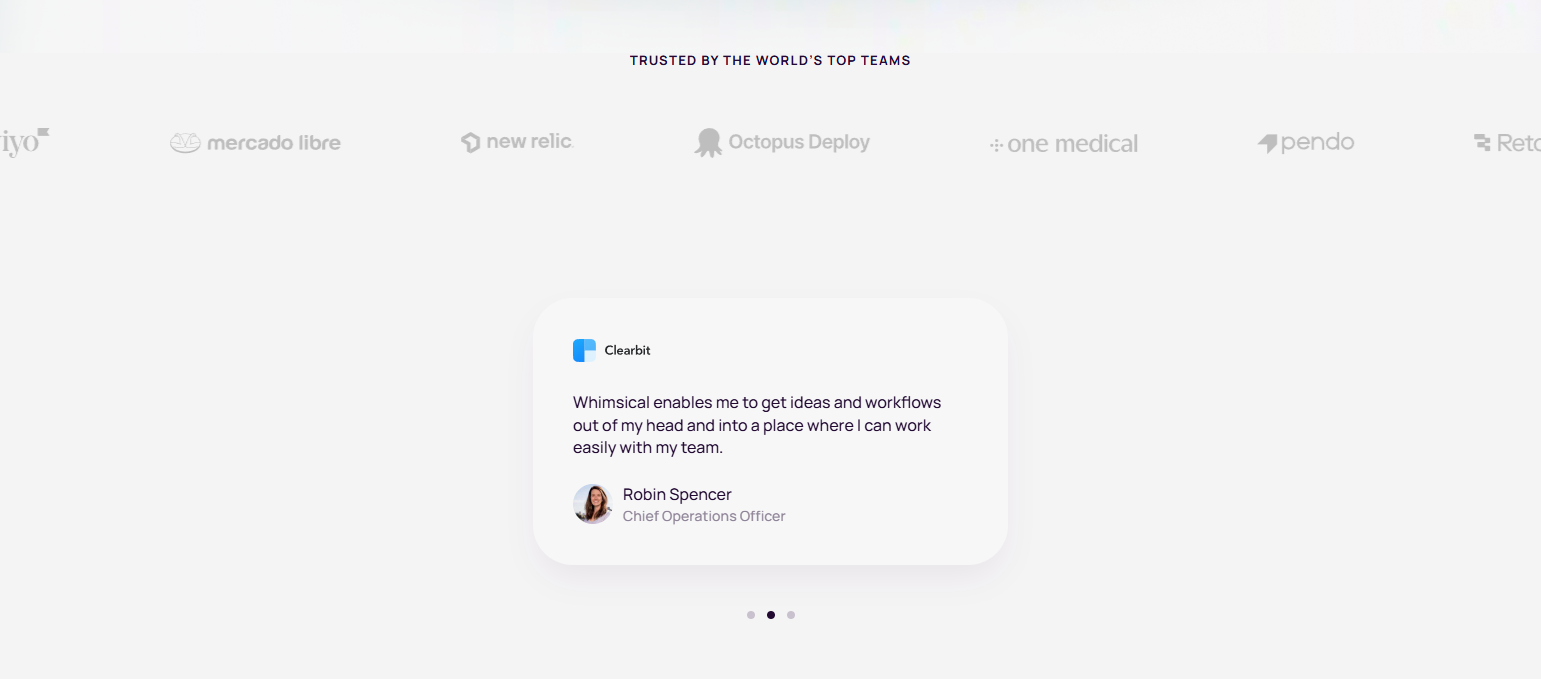
Whimsical features testimonials from meeting facilitators, design thinking coaches, and workshop leaders — the power users whose reputation depends on the tool working smoothly.
46. Coda — Template creator testimonials
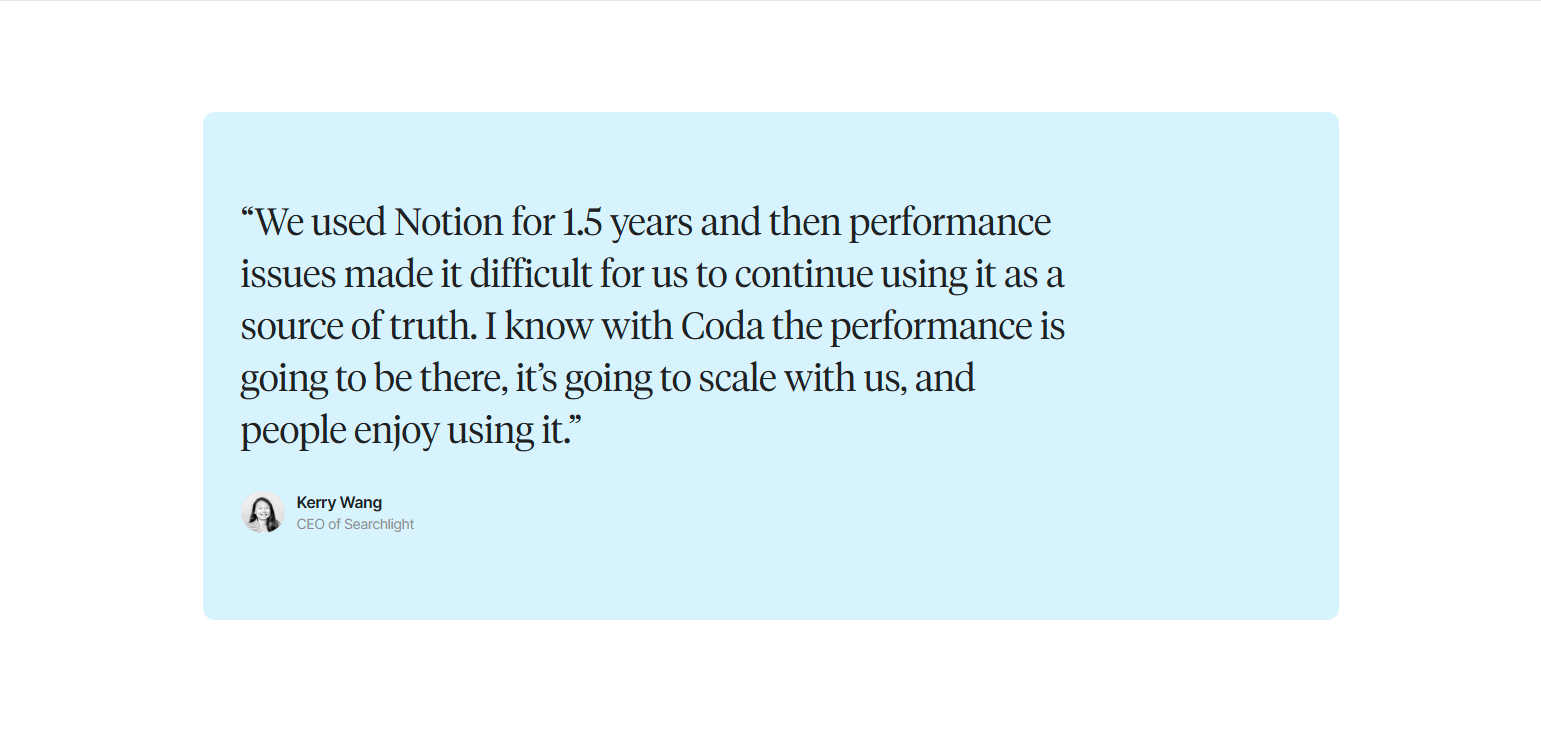
Coda features testimonials from template creators who build in Coda for large communities. Creator endorsements signal that the platform is flexible and powerful enough to build for others, not just yourself.
47. Sprig — Research team ROI quotes
Sprig’s testimonials reference research velocity: “We used to spend 3 weeks on a user study. Now it takes 3 days.” For a research automation tool, speed-to-insight quotes are the right frame.
48. Amplitude — Experiment outcome testimonials
Amplitude features A/B testing outcomes in testimonials: “We ran 40 experiments last quarter and attribution is finally trustworthy.” Outcome specificity (40 experiments, trusted attribution) makes the claim verifiable-feeling.
49. Lattice — People team transformation quotes
Lattice testimonials describe cultural change, not just software: “We went from no structured feedback to quarterly reviews with 90% participation.” HR tools sell culture change, not software. The testimonials reflect this.
50. Sentry — Error budget testimonials
Sentry features testimonials about SLO and error budget management: “We finally have confidence in our reliability targets.” For Site Reliability Engineers, error budget discipline is the proof that Sentry is more than just a bug tracker.
Key Design Patterns from 294 Screenshots
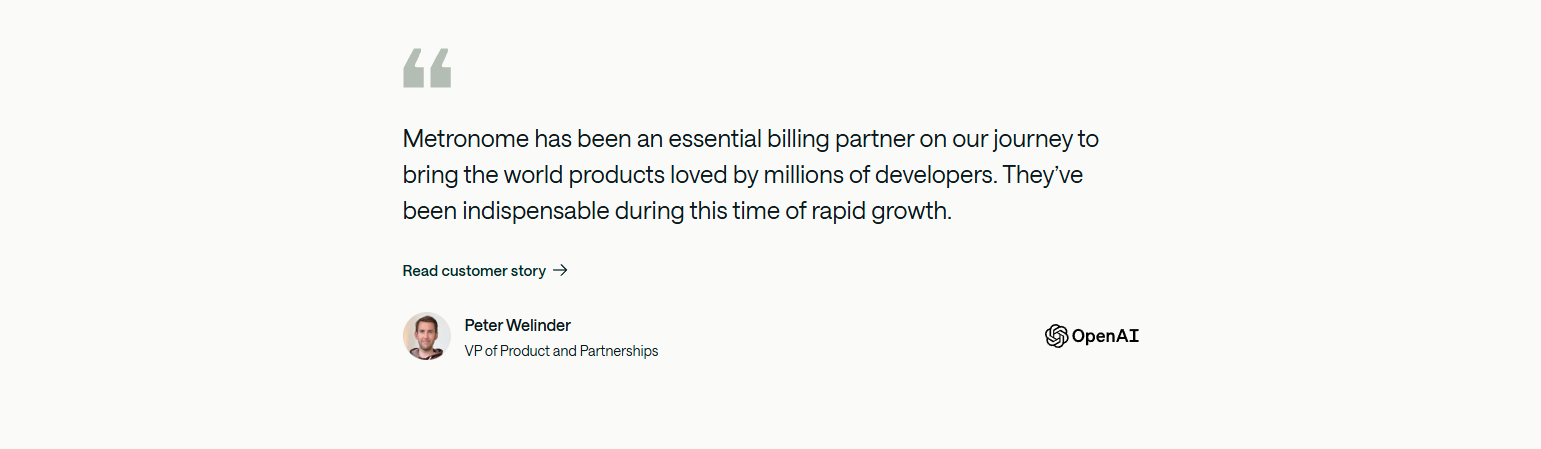
1. Outcome quotes beat sentiment quotes. “Saves 3 hours a week” outperforms “Love this product.” Sentiment is nice; outcomes are persuasive. Collect testimonials that include specific before-and-after comparisons.
2. Context-specific proof converts better than generic proof. Testimonials placed beside the feature they describe, logos grouped by industry, quotes filtered by role — contextual social proof is more relevant and more trusted than a single testimonials section on a separate page.
3. Numbers build credibility. User counts, G2 ratings with review volume, specific ROI metrics, and integration counts all outperform vague claims. The more specific the number, the more credible the proof.
4. Third-party proof (G2, awards, press) supplements first-party proof (customer quotes). Neither alone is as strong as both together. Third-party ratings are independent; customer quotes are personal. Use both.
5. Social proof at the moment of decision beats social proof on a testimonials page. Place proof at the point of hesitation: beside the pricing section, on the signup page, inside comparison pages. A standalone testimonials page is visited by motivated researchers; inline proof catches everyone.
Frequently Asked Questions
How many testimonials should I show on the homepage?
3-5 named testimonials on the homepage is sufficient. More creates decision fatigue; fewer limits coverage of different buyer types. Rotate or A/B test which testimonials appear to different visitor segments over time.
Are logo grids still effective?
Yes, but only with recognizable logos. A grid of unknown small companies is less convincing than 6 well-known logos. Quality over quantity: 6 logos visitors recognize beats 40 logos they don’t.
What’s better: written testimonials or video testimonials?
Video converts better when the buying decision is complex or high-stakes (enterprise software). Written testimonials convert better when decisions are lower-touch (self-serve). Match the testimonial format to your sales motion.
How do I get better testimonials from customers?
Ask specifically: “Can you describe what changed after you started using [product]?” or “What was the before-and-after for your team?” Open questions like “What do you think of [product]?” produce vague answers. Specific prompts produce specific testimonials.
Browse 294 social proof and testimonials screenshots from 258 real SaaS products in the SaaS Boat library. See how the best products in the world build trust with their buyers.