A SaaS About Us page communicates who built the product, why it exists, what the company believes, and why prospects should trust it. Unlike the features page (which describes the product) or the pricing page (which defines the commercial relationship), the About page establishes the human context behind the software. It answers the question every buyer implicitly asks: “Is this a company I want to do business with?”
We analyzed 130 About Us screenshots across 258 SaaS products in the SaaS Boat library. The best About pages don’t just list team members and company stats — they tell a founding story, communicate values through design choices, and build the kind of human trust that features and pricing alone can’t create.
 Notion
 Figma
Figma Stripe
 Zapier
 Canva
Canva Loom
Loom Intercom
 Retool
 Framer
 Whimsical
 Sketch
 GitLab
 Amplitude
 Datadog
 Sentry
 Supabase
 Hotjar
 Auth0
Auth0 Rippling
 Gusto
GustoWhy About Pages Matter for SaaS Conversion
About pages are visited more often than most SaaS companies assume. In our content analysis, About pages consistently appear in the top 5 pages by visit volume for products in the $50-$500/month range — the segment where buyers are evaluating risk, not just features.
The pattern is consistent: buyers who visit the About page before signing up have higher conversion rates and lower churn than buyers who skip it. The About page isn’t a vanity page — it’s a trust checkpoint in the buyer journey.
25 About Us Examples from Real SaaS Products
Mission-Forward About Pages
1. Notion — “We’re here to make software toolmaking accessible”
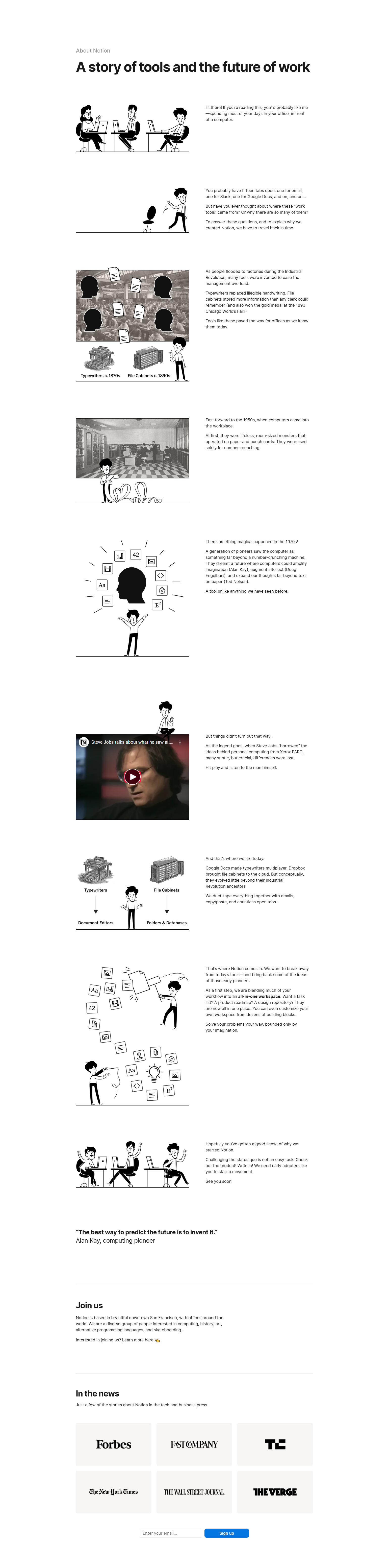
Notion’s About page opens with a clear mission statement before introducing the team. The founding story — two people frustrated by the gap between existing tools and what they imagined — is told through the mission, not through resume bullets. The story explains why the product is the way it is.
2. Figma — “To make design accessible to everyone”
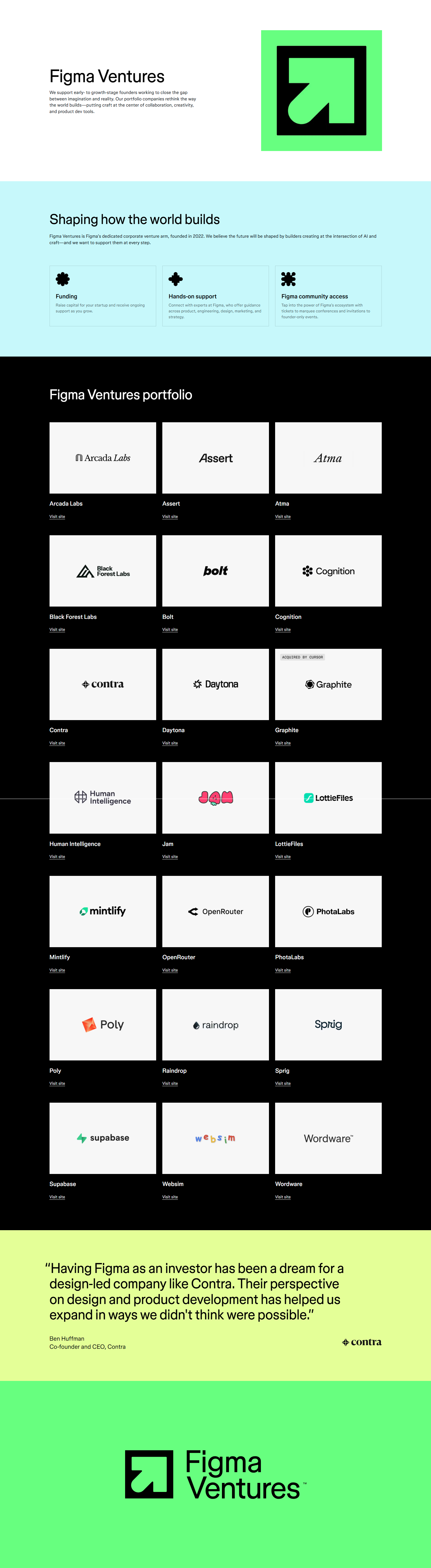
Figma’s About page centers on the original insight: design was too hard to collaborate on because files lived on individual machines. The “what was broken” narrative positions the company as a problem-solver, not just a product builder.
3. Stripe — “We’re increasing the GDP of the internet”
Stripe’s About page uses economic language — not just “we process payments” but a macro-level mission about global commerce. The scale of the mission justifies the scale of the company and signals long-term orientation to investors, partners, and large enterprise buyers.
4. Zapier — Async-first company culture as the story
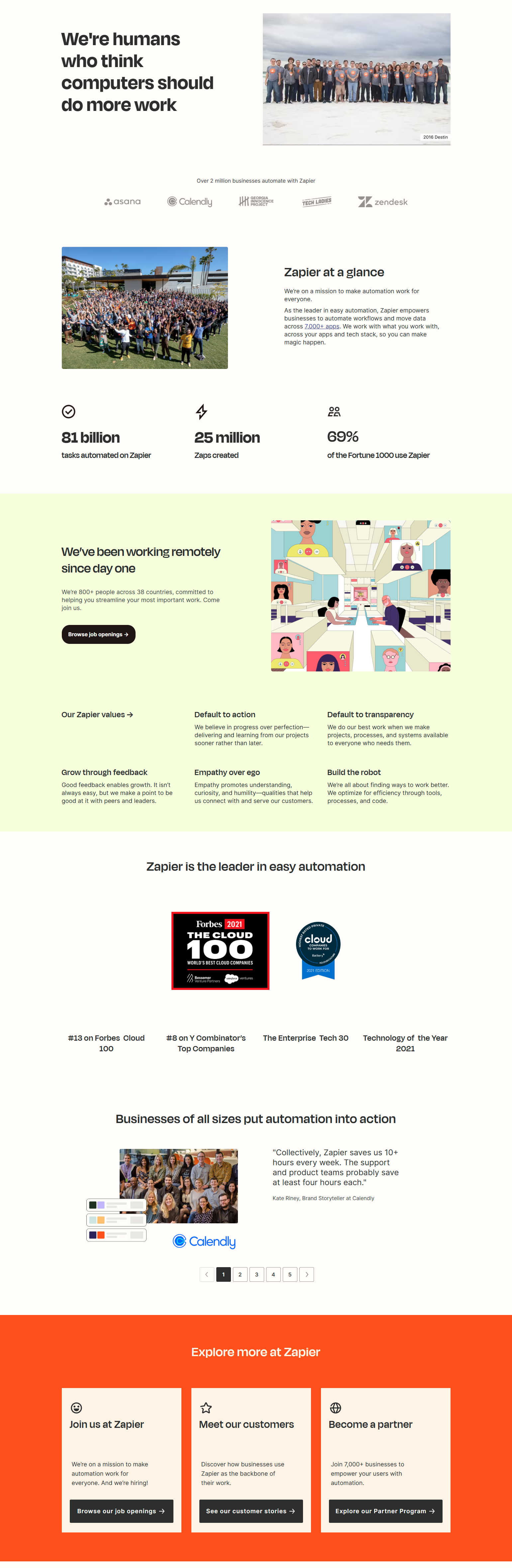
Zapier’s About page features their remote-first, async culture prominently. For a company whose customers use Zapier to automate repetitive work, an About page about a company that automates its own workflow is an authentic proof point.
5. Canva — The democratization narrative
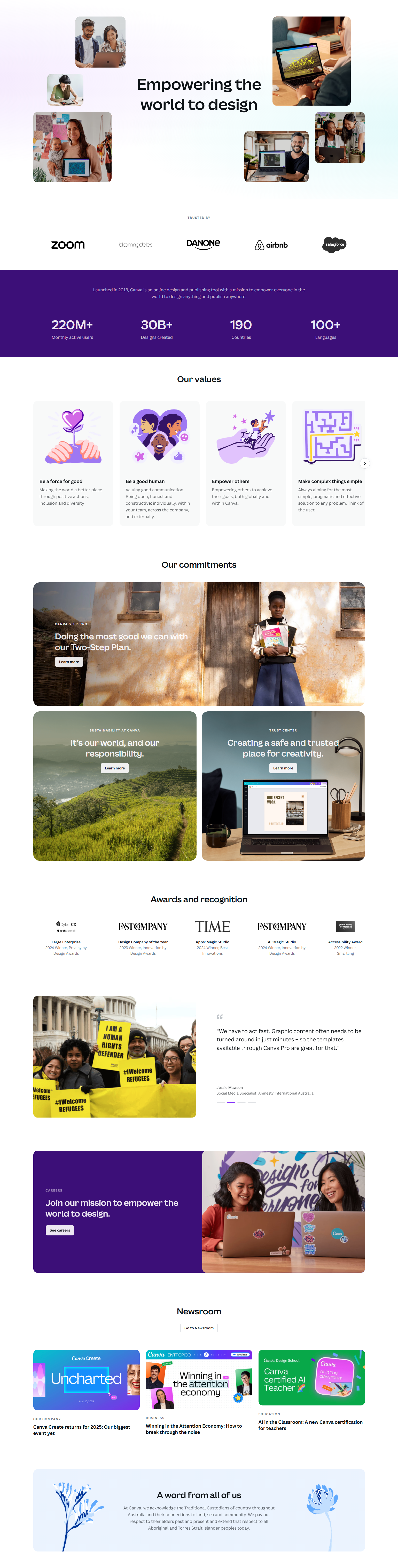
Canva’s About page tells the story of making professional design accessible to non-designers. The narrative is “design used to require a degree; we changed that.” The mission directly matches the product’s purpose and makes both feel important.
6. Loom — Async as a philosophy, not just a feature
Loom’s About page contextualizes the product in the future-of-work narrative. It’s not just a screen recording tool — it’s a thesis about how communication should work. About pages that articulate a worldview create stronger affinity than those that just describe a company.
Team-Forward About Pages
7. Intercom — “Started by four people in a tiny Dublin office”

Intercom’s About page opens with the founding scene — a specific place, a specific number of people, a specific moment. Concrete founding stories are more credible than abstract “we were founded in 2011” statements. The specificity signals that the story is true.
8. Retool — Founder-visible About page
Retool’s About page features visible founder profiles with photos, backgrounds, and specific reasons for building Retool. For developer tools where technical credibility matters, a team page that demonstrates the founders’ engineering background is itself a product trust signal.
9. Framer — Design-team aesthetic
Framer’s About page uses the same design language as their product — expressive typography, large imagery, motion. The page itself demonstrates what their team is capable of. An About page that shows, not just tells, the team’s skills is a portfolio piece.
10. Whimsical — Small team, big product energy
Whimsical’s About page is notably brief — small team size is treated as a virtue, not a weakness. “A small team of focused people” positions leanness as quality indicator: no bloat, no committees, just the product.
11. Sketch — Independent company statement
Sketch’s About page prominently notes that the company is independent, profitable, and self-funded. For a design tool with enterprise customers who fear acquisition or shutdown, independence is a key trust signal. Stating it directly on the About page converts anxious buyers.
12. GitLab — Handbook-first transparency
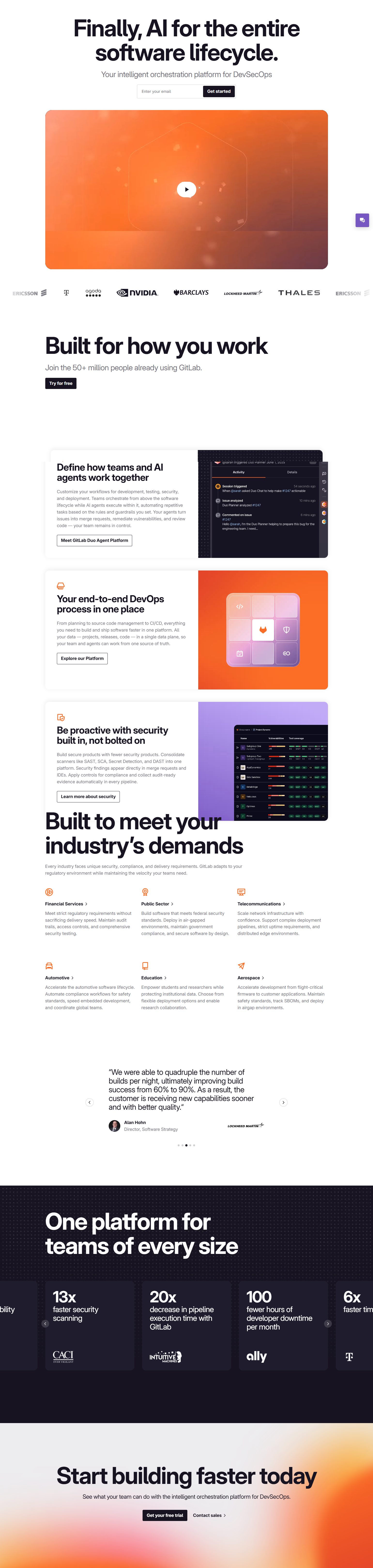
GitLab’s About page links to their public employee handbook — a document that details how the company operates. Radical transparency about culture and process is an unusual trust signal that differentiates GitLab from competitors who guard internal information.
Values-Forward About Pages
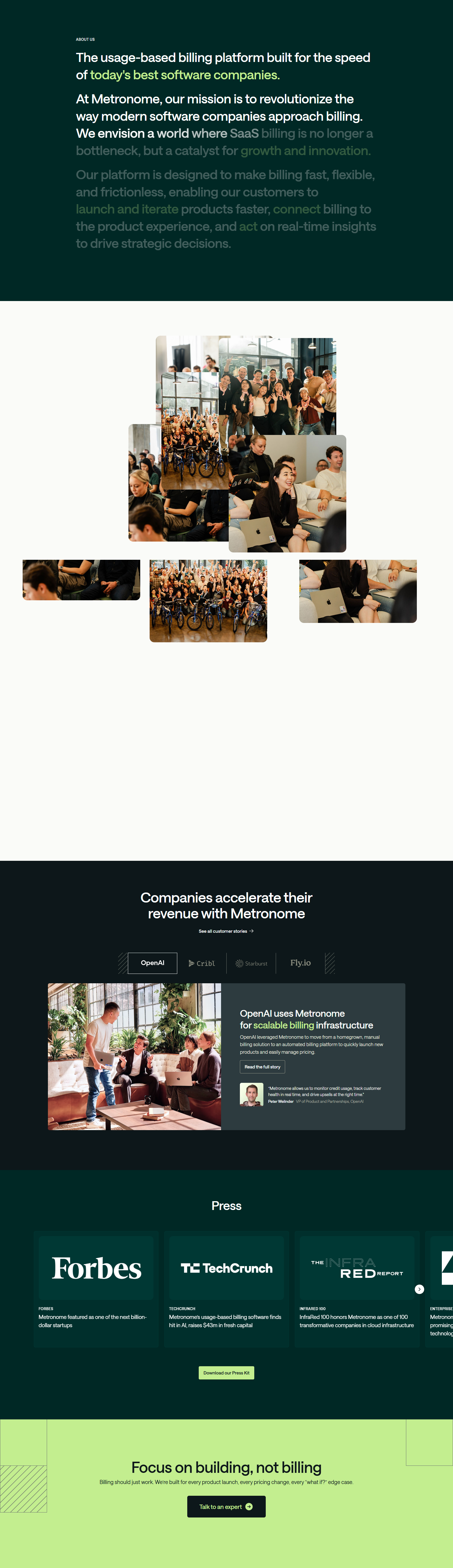
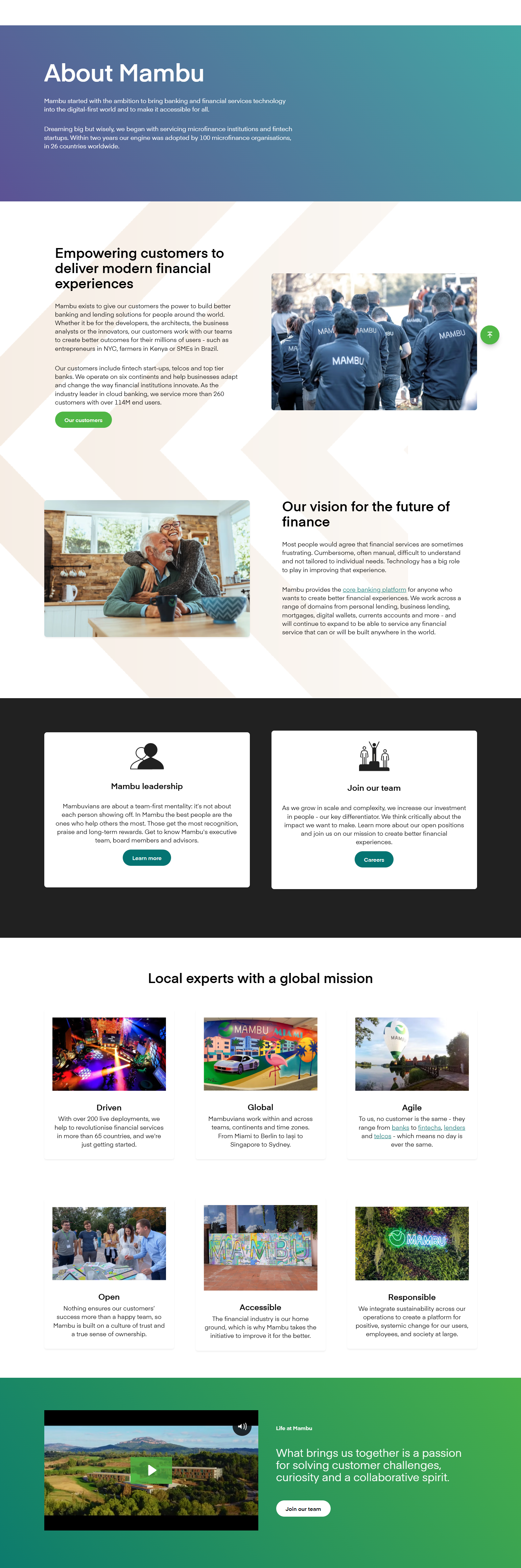
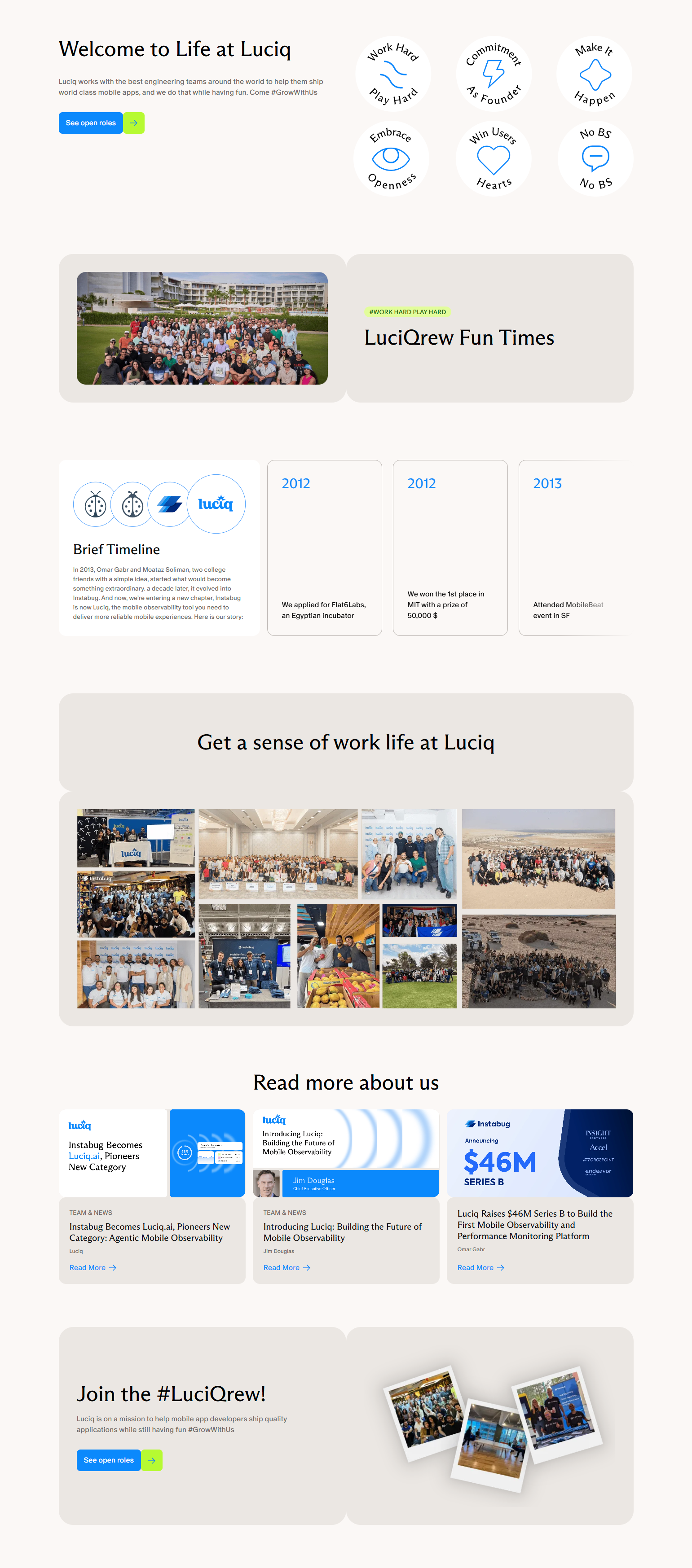

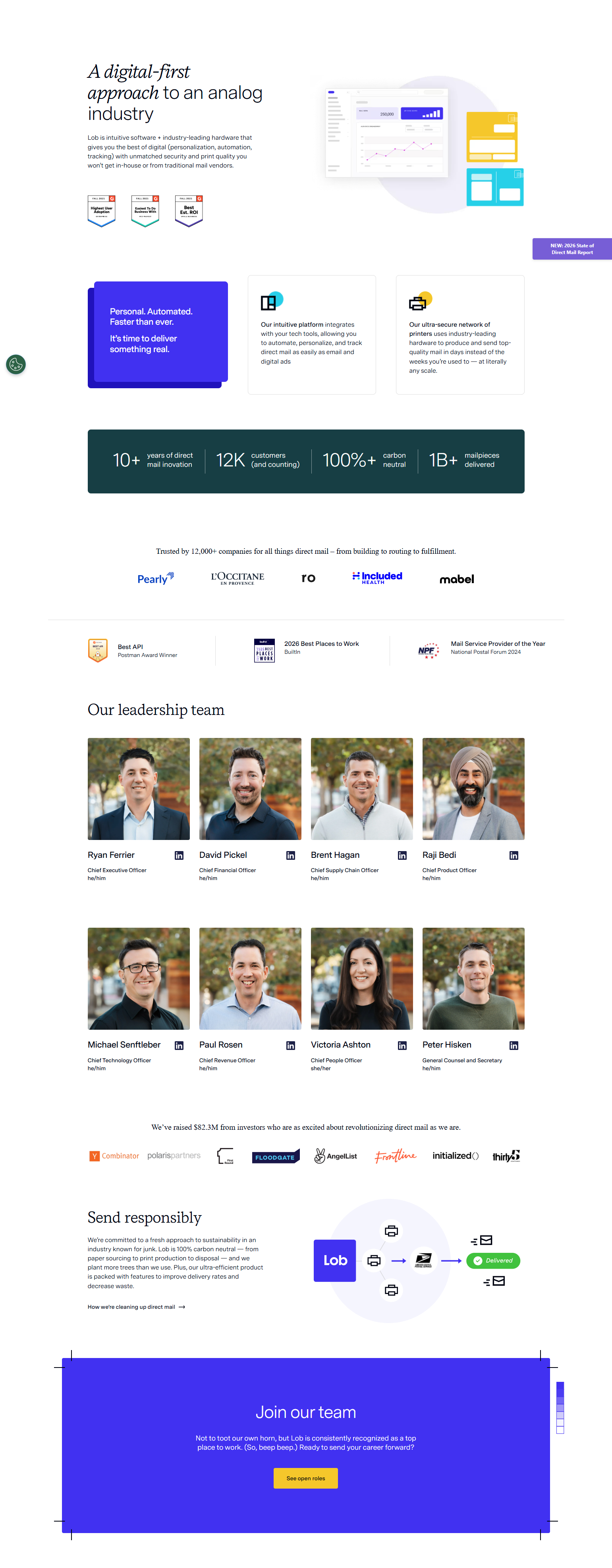

13. Asana — Workplace values as product philosophy
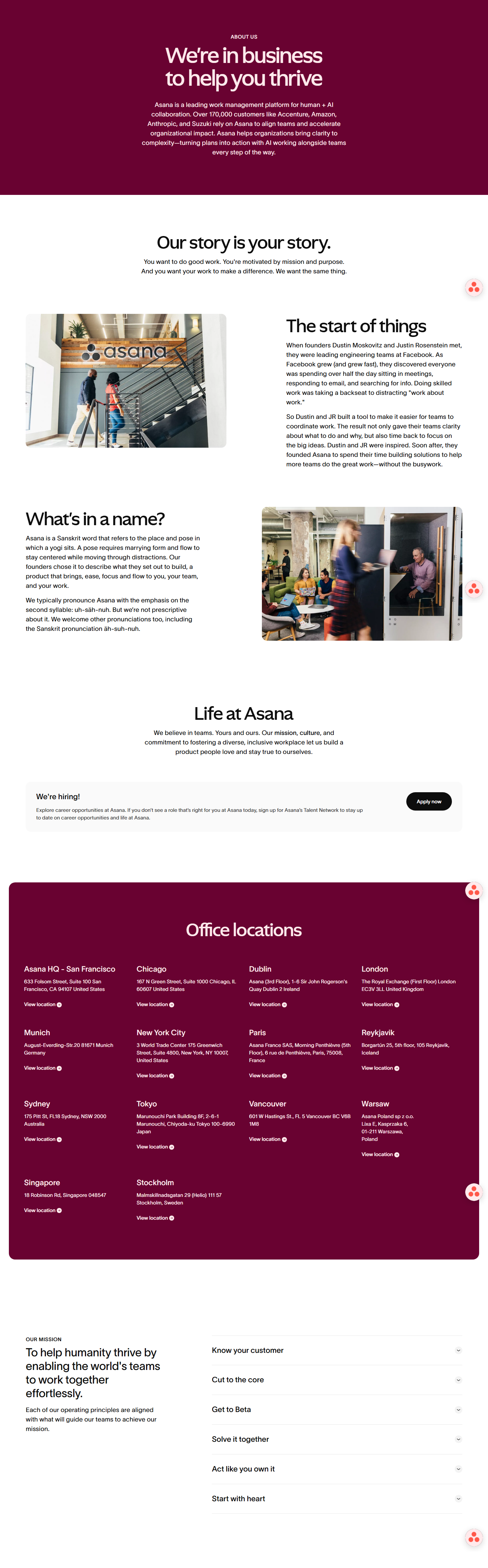
Asana’s About page connects company values to product philosophy: “We believe clarity enables teams to do great work.” The values aren’t HR platitudes — they explain design decisions in the product. About pages that connect internal values to external product choices are more credible than those that list values in isolation.
14. Lattice — People-first company for a people-first product
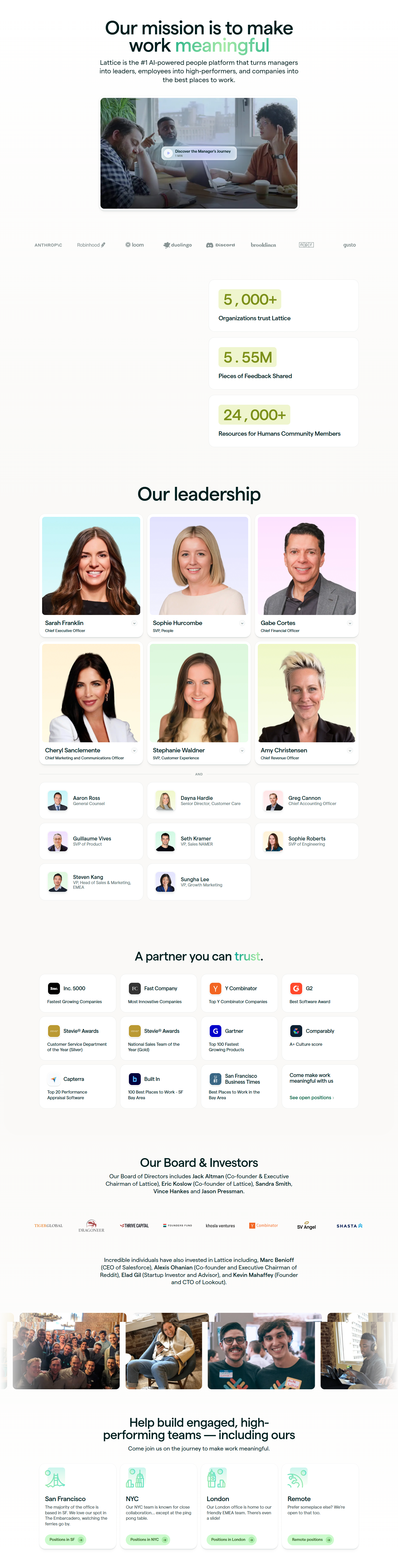
Lattice’s About page is centered on their “people-first” culture. For an HR company that sells performance management tools, an About page that demonstrates their own employee-centered culture is a proof of values — you can trust us to build HR tools because we actually practice good HR.
15. Gusto — “People need champions”
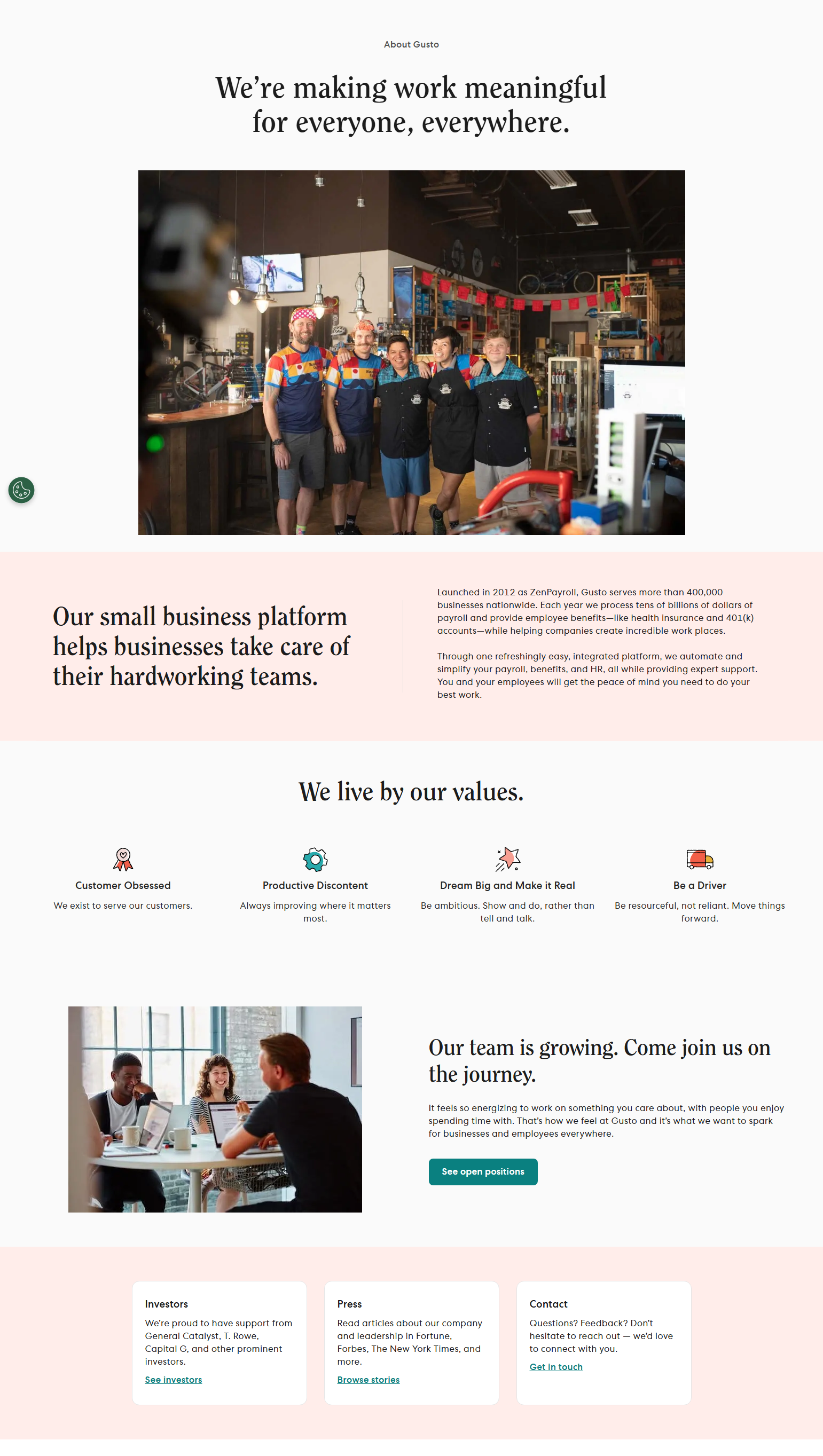
Gusto’s About page uses the language of advocacy: their mission is to “create a world where work empowers a better life.” For a payroll company, this is an ambitious frame — but it accurately describes why Gusto’s features (automatic compliance, health benefits, onboarding) exist.
16. BambooHR — HR for small businesses as a value
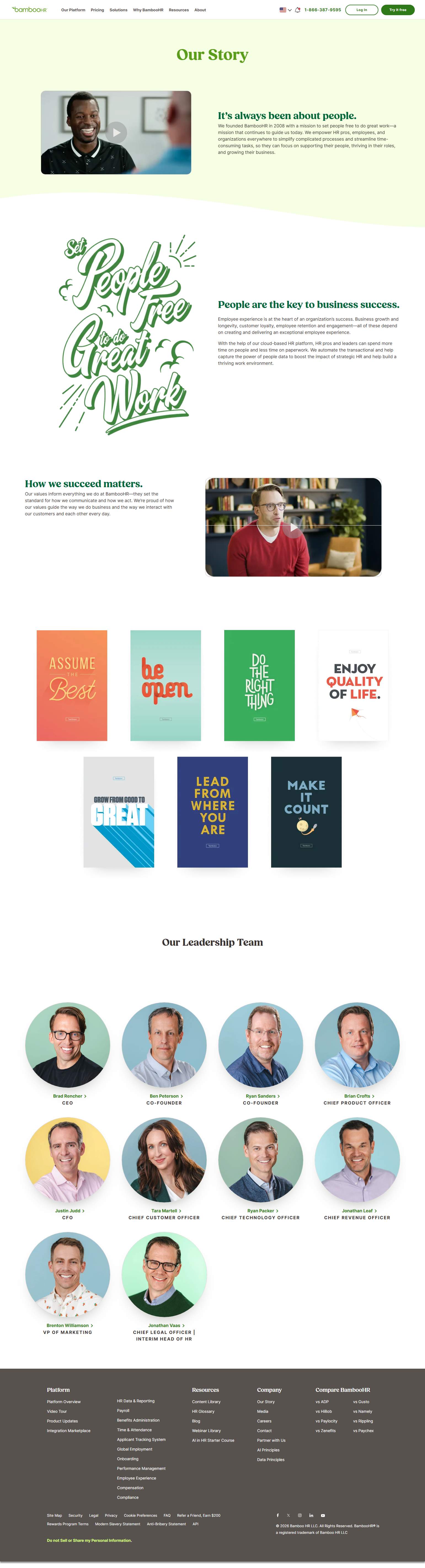
BambooHR’s About page explicitly addresses who they’re for: small and mid-sized businesses that don’t have enterprise HR resources. Specificity of audience on the About page builds more trust than generic enterprise positioning.
17. Deel — Global work as a purpose
Deel’s About page centers on enabling anyone, anywhere to work for any company — a genuine reflection of their product (global payroll and compliance). The mission matches the product: it’s not aspirational positioning, it’s a description of what they actually do every day.
Investor/Enterprise Trust Signals
18. Amplitude — “Trusted by 3,000 companies” above the fold
Amplitude’s About page opens with scale metrics — customer count, team size, offices — before the founding story. For a product in a competitive analytics market, scale signals survival: a company with 3,000 customers is unlikely to shut down.
19. Datadog — Public company signal
Datadog’s About page notes their NYSE listing and investor backing. For large enterprises evaluating infrastructure monitoring tools, public company status is a risk-reduction signal — financial statements are public, accountability is real.
20. CrowdStrike — “We stand for stopping breaches”
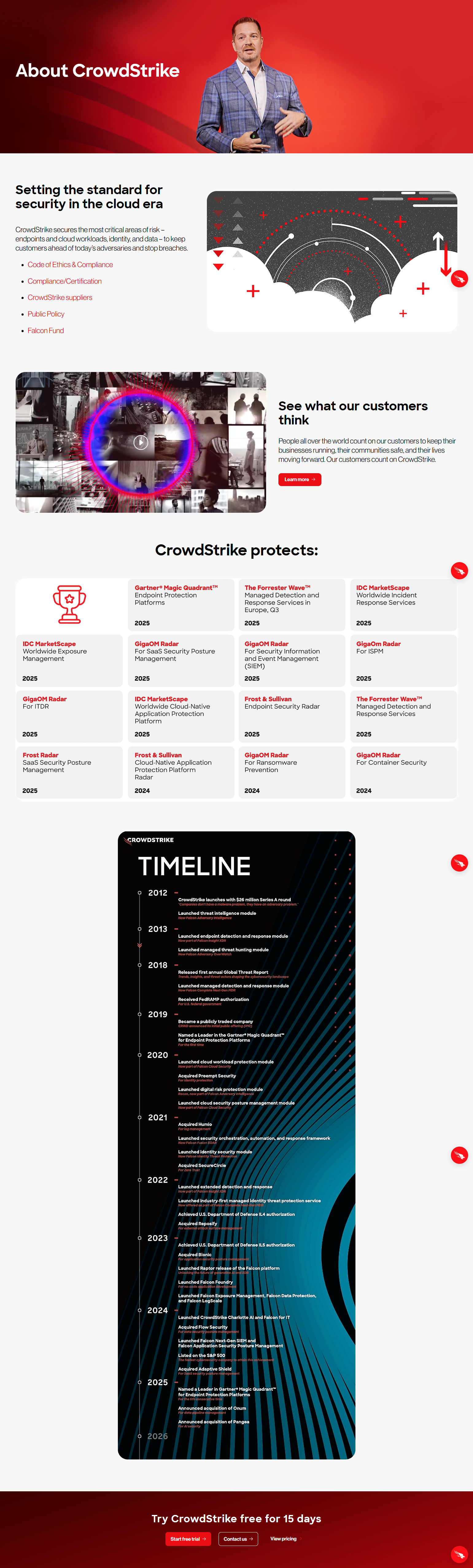
CrowdStrike’s About page opens with a security mission statement before any company information. For a cybersecurity company, the commitment to the mission is the trust signal — buyers want to know if the company is serious about security, not just selling a tool.
21. Rippling — “Built for the complexity of modern work”
Rippling’s About page contextualizes the company in the shift toward distributed, complex workforce management. The narrative is: “Work changed. Legacy HR software didn’t. We built what should exist.” The frame justifies the product’s complexity and positions legacy tools as the wrong answer.
Distinctive About Page Design
22. Supabase — Open source community About page
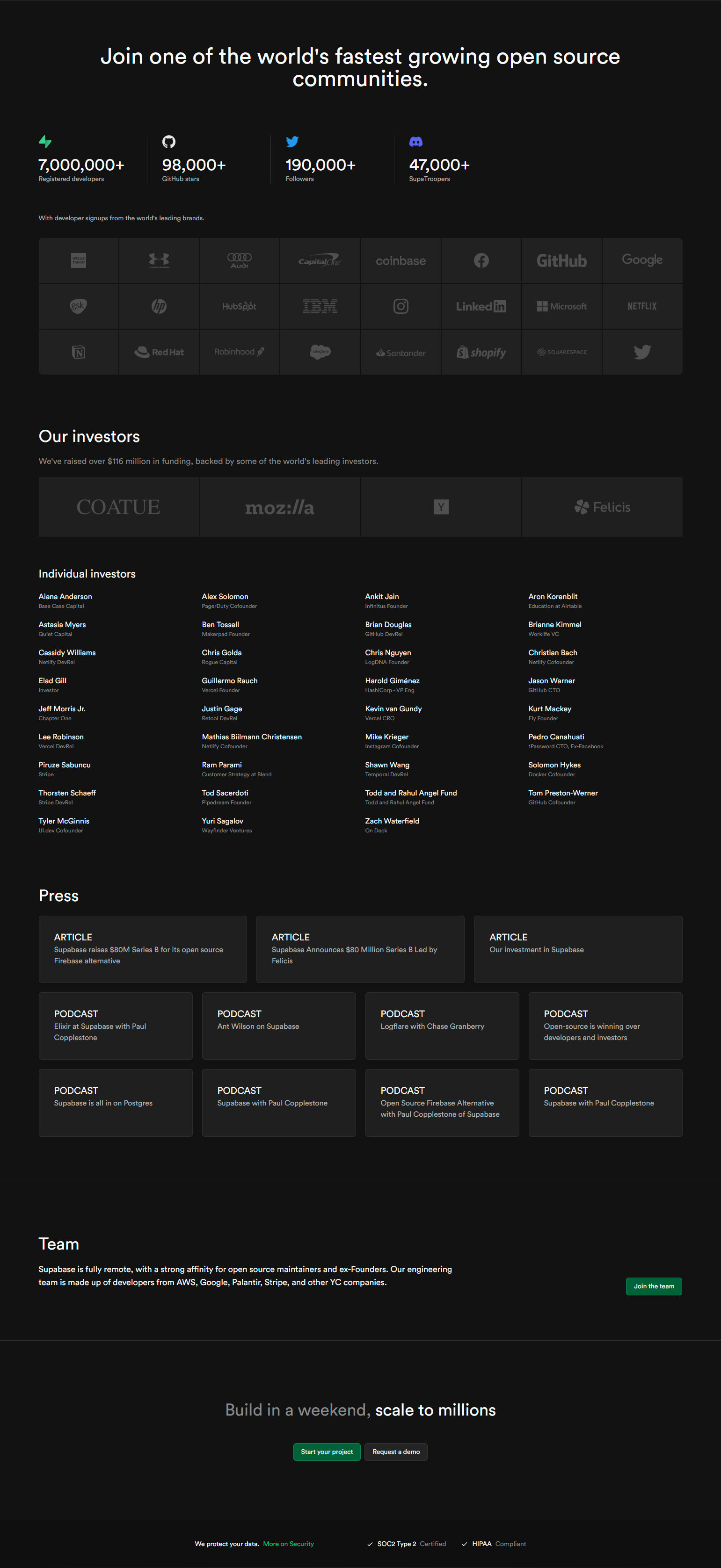
Supabase’s About page highlights GitHub stars, contributors, and open-source governance. For an open-source company, community scale IS the credibility metric. The team section acknowledges community contributors alongside employees.
23. Vercel — Product philosophy as About page
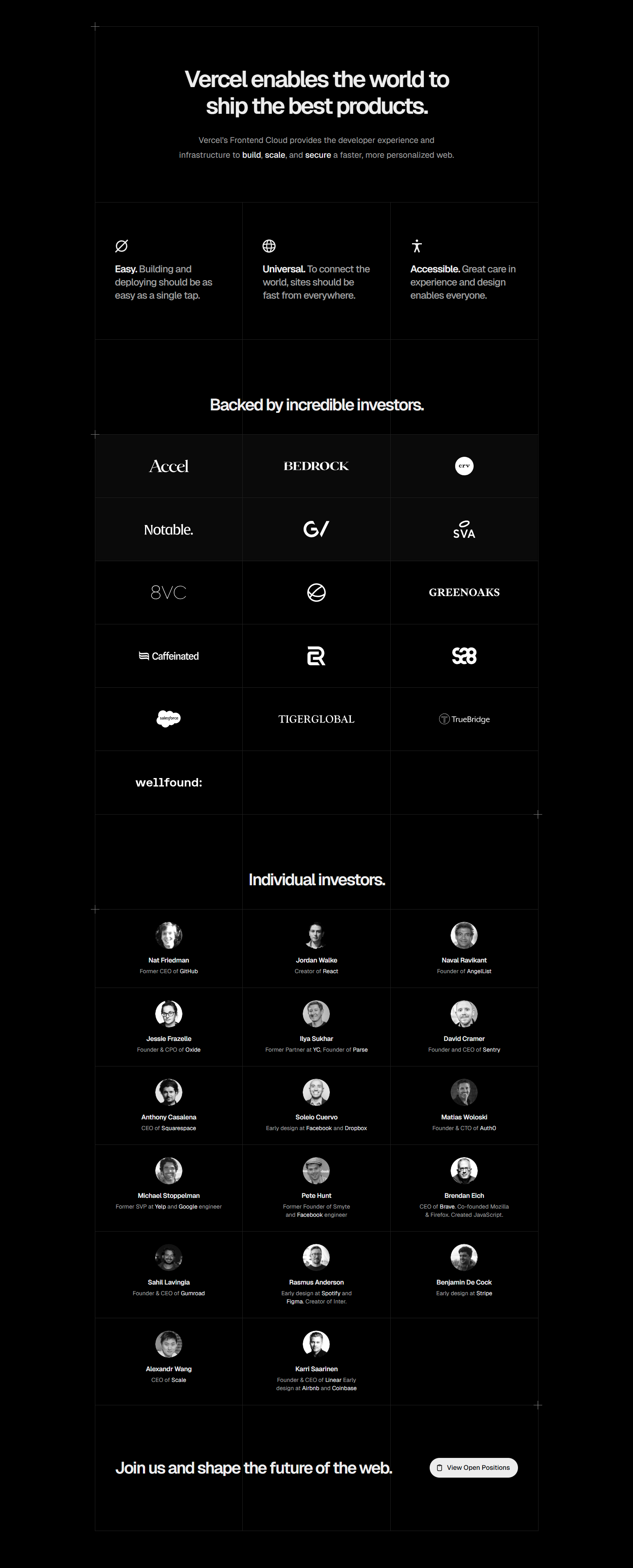
Vercel’s About page is more philosophy than biography. It articulates a thesis about the future of the web (composable, edge-first) and positions Vercel as the infrastructure for that future. Philosophical About pages work for technical products with opinionated founders.
24. Hotjar — “Created by marketers for marketers”
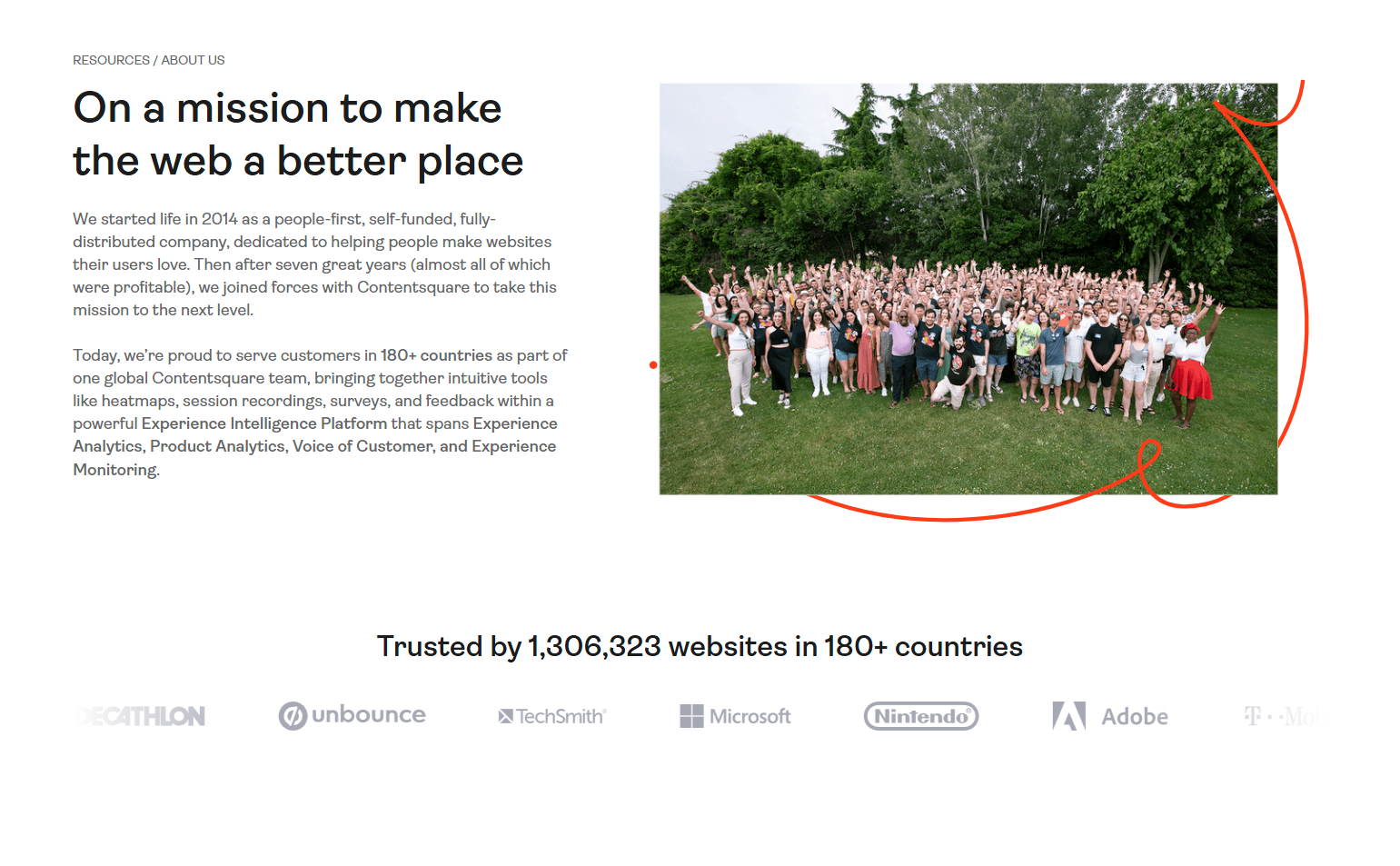
Hotjar’s founding story centers on the founder’s frustration as a marketer who couldn’t understand user behavior without expensive enterprise tools. The “built by someone like you” narrative is one of the most powerful trust frames an About page can use.
25. Auth0 — “Built by developers for developers”
Auth0’s About page makes their developer identity central — the founders are engineers who were frustrated by authentication complexity. For a developer tool, a founding team with relevant practitioner experience is a stronger trust signal than venture funding or market size.
Key Patterns from 130 About Us Screenshots
1. Specific founding stories outperform general company histories. “Two engineers frustrated by X built Y in their apartment” is more credible than “Company X was founded in 2012.” Specificity — names, places, specific frustrations — signals authenticity.
2. Values that connect to product decisions are more credible than value lists. “We believe in transparency, so we publish our pricing, our salaries, and our employee handbook” is more convincing than “Integrity. Innovation. Customer-first.” (three words on a colored background).
3. Independence and stability are trust signals for long-term software. Buyers of infrastructure tools (hosting, auth, payments, HR) need to know the company won’t be acquired or shut down. About pages that address longevity signals — profitability, public status, funding — speak directly to this concern.
4. The team section serves different functions by company stage. Early-stage companies should lead with founders and their relevant experience. Growth-stage companies can include team size and office locations. Public companies can add board and executive profiles.
5. About pages should match the product’s design voice. A design tool’s About page should be beautifully designed. A developer tool’s About page should be spare and technical. A people tool’s About page should feel warm and human. Visual inconsistency between product and About page creates subconscious distrust.
Frequently Asked Questions
Should a SaaS About page include investor or funding information?
Yes, if you’re targeting enterprises or if the funding is from recognizable investors. Enterprise buyers view funding as a signal that the company will survive long enough to serve a multi-year contract. Self-funded or bootstrap companies should note their independence as an alternative trust signal.
How long should an About page be?
Short enough to be read in 2-3 minutes. About pages that run longer than 800-1000 words typically lose readers before the team section. Lead with mission, follow with founding story, close with team. The structure can be short; the photos and names can do the rest.
Should I include team photos on the About page?
Yes. Named photos are the most direct form of humanization available. An About page without photos looks like a company with something to hide, or a content template nobody personalized. Even small teams should include real headshots.
How often should I update the About page?
Update when: you raise a significant round, you hit a meaningful scale milestone (customer count, ARR), the founding story evolves, or key team members join or leave. Don’t update on a calendar schedule — update when there’s something meaningful to say.
Browse 130 About Us page screenshots from real SaaS products in the SaaS Boat library. See how the best products build human trust behind the software.